The Perfect 3-Day Hong Kong Itinerary for First-Time Visitors


Disclosure: This article contains affiliate links. See the Disclosure Policy.
If it’s your first time visiting Hong Kong, three days is actually a really good amount of time.
It’s enough to experience both sides of Hong Kong properly — the famous skyline, ferries, and city energy people come for, but also the quieter side most first-time visitors don’t expect: fishing villages, monasteries, mountain views, local neighbourhoods, and some genuinely fantastic food.
I’ve designed this itinerary so you’ll get the most out of your three-day visit without feeling rushed, overwhelmed, or stuck on a generic tourist loop.
I’ve been visiting Hong Kong for over 45 years — first as a kid when my family lived here, and now as an adult returning regularly — and this is the itinerary I use when showing friends around Hong Kong for the first time.
It includes the must-do Hong Kong experiences like the Star Ferry and Victoria Peak, and a few things many tourists completely overlook — including one of my favourite local neighbourhoods in Kowloon (hint: it’s Sham Shui Po) and a revolving 360-degree restaurant that somehow still flies under the radar despite having some of the best views in the city.
One thing many first-time visitors underestimate though is how physically intense Hong Kong can feel. Between the humidity, hills, crowds, underground stations, escalators, and sheer sensory overload, people often burn out much faster than they expect.
So I’ve been very deliberate about making sure this itinerary flows well geographically, builds in proper breaks, and balances the huge headline attractions with slower local experiences that actually let you enjoy the city properly.
Hong Kong Planning At A Glance
Don’t have a lot of time? Here’s a mini first-timers guide to Hong Kong.

Where to Stay:
– The Kowloon Hotel (Best location & MTR access)
– The Mira (Best facilities)
– The Royal Garden (Best quiet hotel)
Best First-time Experiences:
– Star Ferry
– Tsim Sha Tsui Promenade
– The Peak
– HK Foodie Tour
– Big Buddha on Lantau Island
Itinerary Overview
Here’s a quick summary of this 3 day Hong Kong itinerary.
DAY 1:
Ride the Star Ferry
The Peak & Lunch
Explore Central
Ride a Public Tram
Symphony of Stars
DAY 2:
Sham Shui Po Food Tour
Explore Local Markets
Chi Lin Nunnery & Nan Lian Garden
Dinner at The Grand Buffet
DAY 3:
Ngong Ping Cable Car & Big Buddha
Tai O Fishing Village
Temple St Night Market
👉 Klook and Viator for tickets and tours:
One of the easiest ways to simplify your Hong Kong trip is to buy most of your attraction and tickets online rather than turning up and purchasing them in person. Ticket queues in Hong Kong can be brutal.
For Hong Kong specifically, Klook is the main app I personally use for electronic tickets, and discount buffet and high teas. It’s widely used across Asia, the QR codes are very easy to use, and the prices are often cheaper than buying directly at the attraction.
In most cases, you simply book online, receive a QR code instantly, then scan your phone when you arrive.
For other things like food tours and guided tours, I use Viator. Get-your-guide doesn’t seem to have the same number of options in Hong Kong as it does for other destinations.
Here’s a quick list of the activities mentioned in this itinerary and when I recommend you book ahead:
🚌 Big Bus Tours (Book same day or 1 day ahead)
🚋 Peak Tram Tickets (Book 1–2 days ahead)
🚠 Ngong Ping Cable Car Tickets (Book a few days ahead)
🏯 Big Buddha & Tai O Guided Tour (Book around 1 week ahead)
🍜 Hong Kong Foodie Tour (Book a week or a few days ahead)
🍰 Buffet Lunches & Afternoon Tea (Book around 1 week ahead for discounts)
Arriving in Hong Kong
Unless you’re arriving overland from mainland China, most people visiting Hong Kong will land at Hong Kong International Airport (HKG), which is located on Lantau Island around 30–40 minutes from the main tourist areas.
After clearing immigration and collecting your luggage, you’ve got a few different options for getting into the city.
Personally, if it’s your first time in Hong Kong, I think the Airport Express is one of the easiest ways to arrive.
The trains are fast, clean, air-conditioned, and connect directly into Kowloon and Hong Kong stations in under 30 minutes.
I usually buy Airport Express tickets online through Klook because it’s often slightly cheaper than buying them at the airport counter. You simply scan the QR code on your phone when exiting the station.
If you’re staying in Tsim Sha Tsui like I recommend in this itinerary, you can either:
- catch a short taxi from Kowloon Station (I do this – it’s cheap and saves so much stress)
- or transfer onto the regular MTR i.e Hong Kong Metro (I don’t advise doing this. Hong Kong’s transport system is easy once you settle in, but after a long flight I’d keep your arrival as simple as possible).
If you’re arriving very late at night (the Airport Express operates daily from 05:50 to 00.48), carrying lots of luggage, or simply don’t want to think after a long-haul flight, an airport transfer is completely worth it in my opinion.
I’d also recommend setting up your eSIM before arrival, and ordering your Tourist Octopus Card online ahead of time to pick up at the airport. It makes those first few hours in Hong Kong much smoother.
Where to Stay in Hong Kong for Three Nights
Before getting into the actual itinerary, let’s quickly talk about where to stay — because this can make a huge difference to how enjoyable your trip feels.
Hong Kong is surprisingly easy to get around thanks to the MTR, ferries, and taxis. But on a short trip like this, staying in the wrong area can still add a lot of unnecessary time and friction to your days.
One mistake I see first-time visitors make is booking a hotel based purely on price without thinking about transport time. Hong Kong can look small on a map, but the combination of hills, humidity, crowds, and walking adds up quickly.
For this particular 3-day itinerary, I strongly recommend staying in Tsim Sha Tsui.
If you stay in Tsim Sha Tsui, the entire itinerary becomes much easier.
You’ll have:
- easy Airport Express connections
- direct access to the Star Ferry
- excellent MTR connections
- walkable access to Victoria Harbour
- tons of restaurants nearby
- quick access to both Hong Kong Island and Kowloon
Most importantly, Tsim Sha Tsui works incredibly well for first-time visitors. It’s busy, safe, well connected, and very easy to navigate once you get your bearings.


Over the years, I’ve stayed in hotels all across many parts of Hong Kong, but in recent years I keep returning to Tsim Sha Tsui. You just can’t beat it as a location: I find it makes my trips much easier and less tiring.
Another thing I’d recommend is choosing a hotel close to an MTR station. After a long day exploring Hong Kong, being able to walk five minutes back to your hotel instead of twenty is a much bigger deal than most people expect.

If you want specific recommendations, these are three hotels I personally think work especially well for first-time visitors staying in Tsim Sha Tsui — and I’ve stayed at all three.
I’ve listed links to my reviews below. The reviews also include simple instructions on how to get from the airport to each hotel:
- The Kowloon Hotel — excellent location directly next to an MTR station
- The Royal Garden — quieter location with a fantastic rooftop pool
- The Mira Hong Kong — modern hotel with one of my favourite hotel spas in the city
➡️ You can also read my full guide on Where to Stay in Hong Kong for First-Time Visitors for a much more detailed breakdown of the best areas and hotels.
Day 1
Morning: Tsim Sha Tsui Promenade, Star Ferry & The Peak
Welcome to Hong Kong! This 3 day itinerary assumes you arrive first thing in the morning (or the night before), so you have a full day of exploring ahead of you.
Tsim Sha Tsui Promenade
After dropping off your bags at your hotel, it’s time to grab some breakfast and go for a waterfront stroll along the Tsim Sha Tsui Promenade, where you’ll get some of the best skyline views in Hong Kong.
Before taking the short walk down Nathan Road to the harbour, grab something to eat from one of the many local bakeries or casual eateries nearby. If you’re staying at The Mira Hong Kong (and I recommend you do) or The Kowloon Hotel, you’ll find plenty of them tucked into the surrounding streets and side lanes.
Most have little serving windows facing the footpath. Just point at what you want and pay — cash is easiest, although some places also take Octopus cards.
I’d recommend grabbing a pineapple bun or sausage bun for breakfast. These little neighbourhood bakeries are part of everyday life in Hong Kong, and they’re one of the things I still love most about staying in Tsim Sha Tsui.
With breakfast in hand, make your way down to the waterfront.
If this is your first time in Hong Kong, this is usually the moment the city really hits you. Hong Kong’s unique skyline across Victoria Harbour is genuinely spectacular, especially in the morning before the haze and humidity build later in the day.
Walk past the Avenue of Stars, take your time along the waterfront, and just soak up the atmosphere for a while. Even after decades of visiting Hong Kong, I still love this part of the city.


Star Ferry Ride
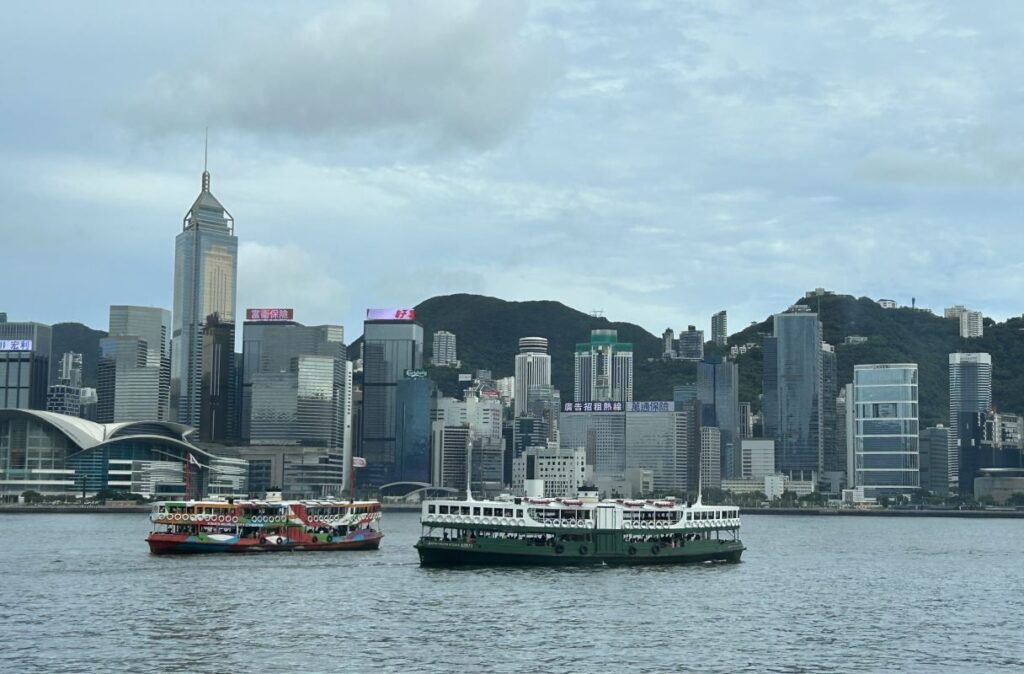
Once you reach the end of the Promenade, you’ll find the Star Ferry terminal. Take the historic Star Ferry across Victoria Harbour to Central.
The Star Ferry is still one of my absolute favourite things to do in Hong Kong, and it only costs a few Hong Kong dollars (yes, you can use your Tourist Octopus Card). I always recommend sitting upstairs for the best harbour views.
The ride itself only takes around 5–7 minutes, but it’s a wonderful introduction to Hong Kong with incredible views across both sides of the harbour.
👉 Read my Guide: How to Ride the Star Ferry in Hong Kong.
Victoria Peak by Bus
Once you arrive in Central, next on the agenda is Victoria Peak — Hong Kong’s most iconic lookout.
Now, you can absolutely take the Peak Tram both up and down, which is totally fine if you’re short on time. But because you’ve got three full days in Hong Kong, I’d actually recommend slowing things down a little and taking the No.15 double-decker bus up to the Peak instead, then catching the Peak Tram back down later.
👉Read my guide: How to get to Victoria Peak (with pictures).
The bus stop is conveniently located close to the Central Pier where you get off the Star Ferry, so the route flows really naturally.
Personally, I think the bus is a much better experience than standing in the huge queue for the uphill Peak Tram.
The No. 15 bus ride itself is part of the experience. It gives you a brilliant bird’s-eye view of the city as the bus winds through Central, Admiralty, and Wan Chai before climbing up through the Mid-Levels. You’ll pass skyscrapers, steep streets, dense apartment blocks, and greenery that almost feels jungle-like in places.
Allow around 2–3 hours for your the full journey and visit. This includes:
- finding the bus stop
- waiting for departure
- the bus ride uphill
- time enjoying the views at the Peak
- and lunch at the top
The bus journey itself usually takes around 45 minutes depending on traffic.
When you arrive at Victoria Peak, spend some time wandering around the shops at The Peak Galleria and Lugard Road viewpoints, including the famous Lion’s Pavilion.


There’s a walk you can do called the Peak Circle Walk. But personally, I don’t think that’s the best use of time on a shorter first Hong Kong trip — it takes around 90 minutes and can end up eating a big chunk of your day.
One thing I’d encourage you to do in Hong Kong is occasionally slow down rather than constantly jumping between attractions. And having lunch at The Peak is actually a lovely way to do that.
There are some great restaurants up there. The Peak Lookout, in the old stone building, is a long-time family favourite of mine, but there are also some excellent Chinese restaurants inside Peak Galleria, including Chung’s Tea House and Petit Jardin.


🚍If you’d prefer a more structured sightseeing day with less navigating, the Big Bus Hong Kong hop-on-hop-off tour is actually a pretty good alternative for first-time visitors as well. The route covers many of the major sights around Central, Victoria Peak, and Causeway Bay, and can be a nice lower-effort option if you’re dealing with heat, jet lag, or only have a short amount of time in Hong Kong.
Afternoon: Wander through Central & Public Tram Ride
With lunch finished, it’s time to explore Central before heading back to your hotel for a rest. Central is Hong Kong’s main business district and one of the best places to experience the city’s famous mix of old and new in a very compact area.
Rather than hopping back on the No.15 bus, I’d suggest taking the historic Peak Tram back down instead.

The ride down is incredibly steep and one of those classic first-time Hong Kong experiences. You can buy tickets at The Peak, but it’s easier to prebook online through Klook.
Once you arrive back down in Central, make your way toward Queen’s Road Central.
This area gives you a really good feel for modern Hong Kong. You’ll pass international brands like COS, Lululemon, and Marks & Spencer sitting alongside older streets, tiny market lanes, and old trams rattling through the middle of the skyscrapers.
Along the way, you’ll come across “The Lanes” (Li Yuen Street East and West), two narrow alley-style market streets packed with souvenirs, bags, cheap gadgets, random household items, and all sorts of chaotic bargain-bin finds. It’s touristy, but still fun for a wander.
From there, continue uphill to Pottinger Street — nicknamed “Stone Slab Street” — one of Central’s oldest streets, still lined with uneven granite steps laid long before escalators and elevators transformed the city.
Keep walking uphill until you reach Hollywood Road. This area feels noticeably calmer and older than the business district below, with antique shops, cafés, galleries, and narrow side streets running off the hill.
One of the highlights here is Man Mo Temple, one of Hong Kong’s oldest and most famous temples. Even if you’re not especially interested in temples, it’s worth stepping inside for a few minutes. The huge hanging incense coils and smoky interior feel completely different from the glass skyscrapers just down the hill.
Nearby, you’ll also find Cat Street (Upper Lascar Row), a small antiques market filled with jade, Mao memorabilia, curios, old signs, and tourist trinkets.


Public Tram Ride
Once you’ve had enough exploring, either make your way back to your hotel, or hop aboard one of Hong Kong’s historic public trams and ride it all the way to Causeway Bay.
Riding the public tram in Hong Kong is super easy. You can’t really miss them because they run back and forth, through the middle of Central. Just wait at any tram stop, hop on the Causeway Bay tram using the back entrance, grab a seat upstairs if you can, then pay when you exit at the front.
I think a tram ride is one of the best experiences you can have in Hong Kong. I still do this loop every time I visit. It’s surprisingly relaxing, and endlessly entertaining because there’s so much happening outside the windows the entire time.
You’ll pass old apartment blocks, neon signs, markets, luxury malls, tiny local shops, and some of the densest streets in the city.
Once you see the huge SOGO department store on your left, you’ve reached Causeway Bay. From there, simply jump on the MTR back to your hotel.


🚃If you enjoy slower, scenic experiences, the TramOramic Tour is another lovely way to see Hong Kong Island. It uses a restored vintage tram with an open upper deck and passes through areas like Central, Wan Chai, and Causeway Bay. It’s definitely designed for tourists rather than commuters, but the elevated views and slower pace give you a very different perspective of the city compared to the regular public trams. It also gives you a headset with commentary.
Evening: Hotel Break, Dinner & Symphony of Lights
At this point, I’d recommend having a proper break before dinner.
This is exactly why I recommend staying somewhere comfortable for a 3-day Hong Kong trip, especially if your hotel has a pool or spa. Hong Kong can be surprisingly exhausting physically, particularly in the humidity.
One of my favourite Tsim Sha Tsui hotels is The Mira Hong Kong. I absolutely love the indoor pool and spa there after a long day exploring the city. The giant jacuzzi is heaven, and because the pool is indoors, it’s good in any weather.
Getting back is easy, too. If you’ve taken the tram to Causeway Bay, simply jump on the MTR and change trains at Admiralty or Central. Hong Kong’s transport system looks intimidating at first, but it’s very straightforward when you’ve done it once.
Depending on your energy levels, room service is completely acceptable tonight. I can personally vouch for the room service at The Mira — the Chinese food is very good. I’d probably skip the western food though; I once ordered nachos there and they were genuinely terrible.
But if you still feel like heading out to eat, this is one of the reasons I love staying in Tsim Sha Tsui so much. You can simply walk outside your hotel and immediately find yourself surrounded by restaurants, bakeries, noodle shops, dessert places, cheap eats, and busy local streets full of energy.
At night, this whole area absolutely comes alive. The streets are packed with people, neon signs light up the buildings, and there’s this constant buzz. It’s so much fun.
Some suggestions where to eat include:
- Hau Fook Street — one of my favourite streets in Tsim Sha Tsui for cheap eats. There are a few little restaurants packed into this area, including Thai, Korean, Japanese, Cantonese, and cheap local noodle places.
- Aqua — definitely more of a splurge, but the harbour views are fantastic. You’ll need a reservation.
- MOA Dining — located inside the Hong Kong Museum of Art right on the waterfront. It’s expensive, but the setting and views are excellent.
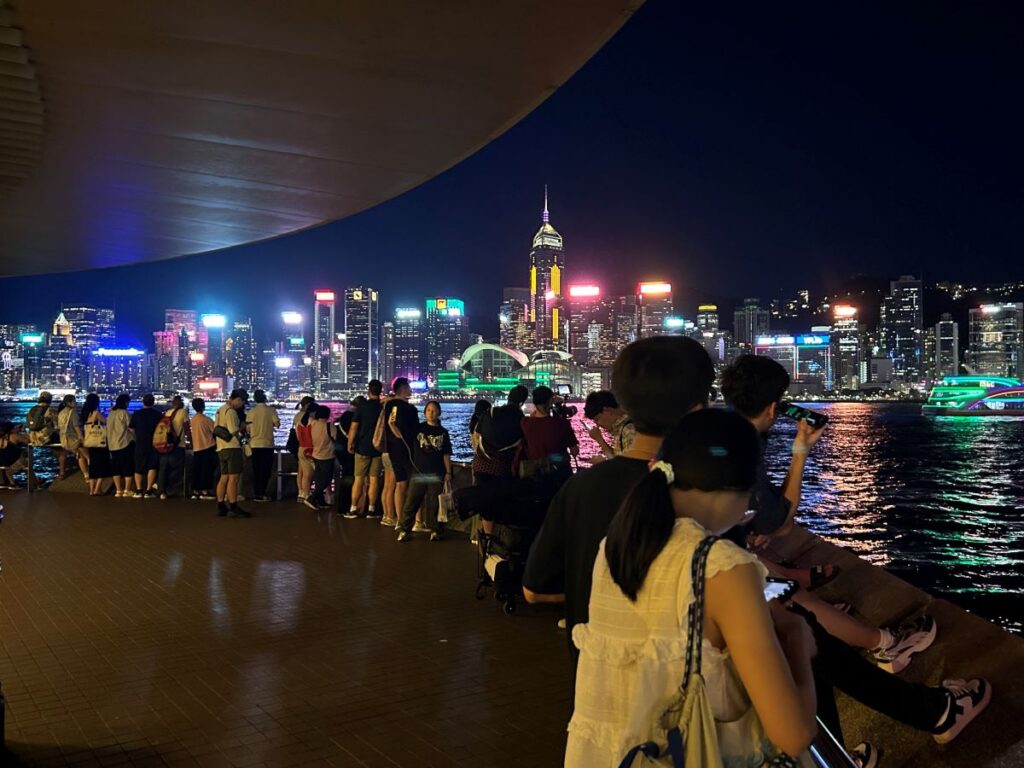
After dinner, make your way down to the Tsim Sha Tsui waterfront for the Symphony of Lights at 8 PM.
It does get extremely busy, so expect crowds, but the atmosphere is part of the experience. I’d try to catch it while you still can as the light show is soon to be retired.
Day 2
Morning: Sham Shui Po Food Tour & Local Hong Kong Markets
After a fairly big first day, I’d keep this morning structured and easy — which is exactly why I think this is the perfect point in your trip to do a Hong Kong food tour.
I recommend the Hong Kong Foodie Tour in Sham Shui Po, which also gives you a chance to experience the Kowloon side of Hong Kong and a much more authentic slice of local life.
I personally booked and paid for the Hong Kong Foodie Tour in Sham Shui Po on my most recent trip to Hong Kong, and I genuinely loved it.

Hong Kong Foodie Tour (Sham Shui Po)
⭐ Best for authentic local food experiences
⭐ Licensed English-speaking guide
⭐ Great for first-time visitors
⭐ Includes multiple tastings over 3 hours
Even though I used to live in Hong Kong and return often, I still learnt a huge amount from it — especially about Hong Kong food culture and all the little local places I’d either never tried or never felt confident walking into myself.
One thing I really liked about this tour was the 9am start time. That’s actually pretty unusual for food tours, which often start later in the day and can make sightseeing awkward because you end up having to structure your whole afternoon around them.
This one works much better for a shorter Hong Kong trip. You get out early, experience a completely different side of the city, eat an enormous amount of food, and still have most of the afternoon and evening free afterwards. I found it much easier and more efficient to plan around than a late afternoon or evening food tour.
To get to the tour meeting point, simply hop on the MTR to Sham Shui Po station. The guide meets you inside the station, and the instructions were very easy to follow when I did it.
You’ll spend around three hours exploring Sham Shui Po, one of the most authentic neighbourhoods in Hong Kong and an area most tourists never properly see. It’s busy, gritty, fascinating, and packed with local markets, bakeries, cha chaan tengs, noodle shops, and family-run food businesses.
One of the things I loved most about this tour was that it didn’t feel touristy or staged. We visited real local places that Hong Kong people actually use every day.
Some of the foods I tried included:
- pineapple buns
- Hong Kong milk tea
- rice noodle rolls (cheung fun)
- dumplings
- tofu desserts
- bamboo noodles
One of the biggest surprises for me was finally going inside a traditional cha chaan teng properly. I’d walked past these diners for years without really understanding how they worked or what to order. Having someone explain the menus, the culture, and the food made the whole experience feel much less intimidating afterwards.
The walking itself is easy and mostly flat, and because it’s a guided tour, you don’t need to think too hard this morning — which is actually quite nice after a busy first day exploring Hong Kong.
I’d strongly recommend booking this ahead of time because the groups are small and tours can fill up quickly.
Once the tour finishes around 12.30, spend some time looking around the markets in the surrounding streets.
Markets to check out in Sham Shui Po:
- Apliu Street Flea & Electronics Market — A haven for tech lovers, packed with vintage cameras, second-hand gadgets, and unusual electronic finds.
- Fuk Wa Street Market — A busy spot for affordable clothing, everyday accessories, and a glimpse into local daily life.
- Fuk Wing Street (“Toy Street”) — A nostalgic paradise filled with collectibles, figurines, and childhood throwbacks.


Afternoon: Chi Lin Nunnery & Nan Lian Garden
After a busy morning, I’d slow things down a bit and head to Chi Lin Nunnery and Nan Lian Garden. Hop on the MTR to Prince Edward Station, then simply change trains there and continue on to Diamond Hill Station.
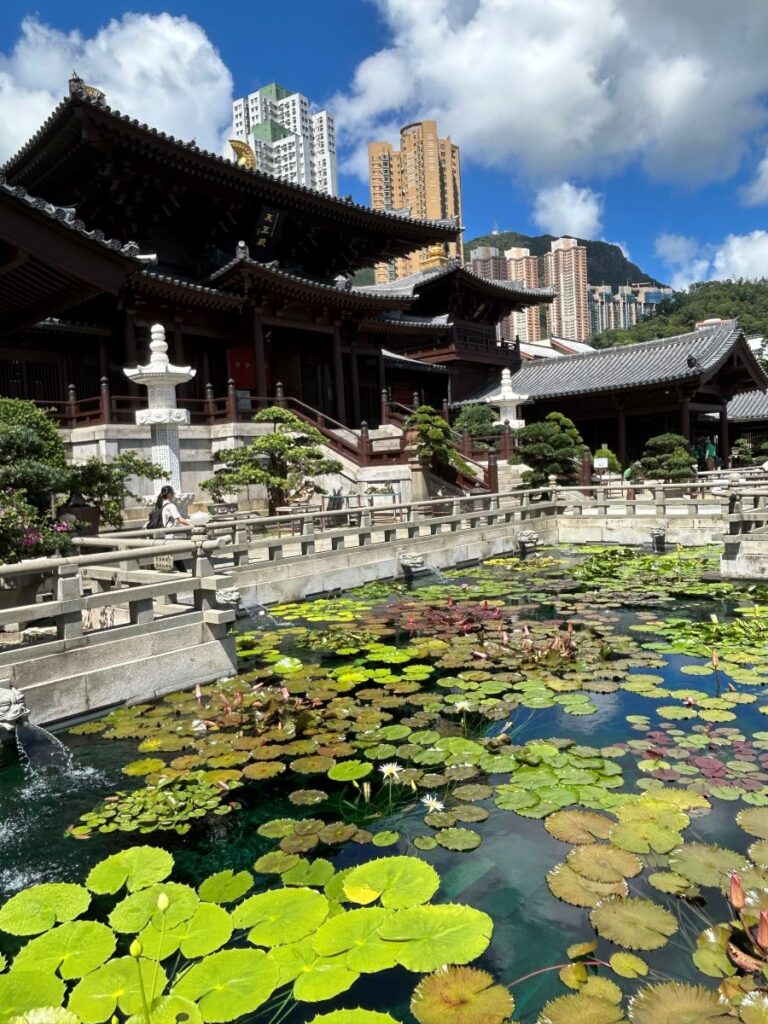
Chi Lin Nunnery is a wooden temple complex built entirely without nails, which is pretty incredible when you see how intricate it is up close.
Inside, you’ll find lotus ponds, quiet courtyards, incense drifting through the air, and beautifully kept halls filled with golden deities. And just a quick note here: while photos are fine around most of the complex, avoid taking photos directly of the deities themselves.
Just across the road is Nan Lian Garden, a perfectly landscaped Tang Dynasty-style garden with ponds, bonsai trees, little bridges, and carefully arranged rocks and pathways.
What I always notice here is how quiet it feels. Even though you’re still in the middle of Hong Kong, the traffic noise and crowds suddenly disappear.
Walk slowly, take some photos, and just enjoy having a calmer afternoon after the intensity of Sham Shui Po.
🍵 Optional tea break: If you feel like sitting down for a while, the Nan Lian Garden teahouse is a lovely spot for traditional Chinese tea and light snacks. It’s simple, peaceful, and a nice reset before the evening.
Once you’ve had enough, head back to your hotel for a rest because you’ve got a special dinner planned for tonight.

Evening: The Grand Buffet, Wan Chai
Tonight, I want you to experience a side of Hong Kong that most first-time visitors completely miss — dinner at The Grand Buffet in Wan Chai.
The Grand Buffet is one of my favourite recommendations for first-time visitors to Hong Kong. It’s not especially well known among tourists and you probably won’t see it on many generic “Top Things to Do in Hong Kong” lists, which is exactly why I love recommending it so much.
The restaurant sits on the 63rd floor of the Hopewell Centre and slowly revolves as you eat, giving you constantly changing 360-degree views across Hong Kong. Between the skyline views, the atmosphere, and the sheer amount of excellent food, it ends up feeling like a really memorable Hong Kong experience rather than “just a buffet.”
My family has been going here for years and I genuinely still love it every time I go back. In fact, I’d rank it up there with doing The Peak or riding the Star Ferry as one of the standout experiences people remember from their Hong Kong trip.

The Grand Buffet
- 360° revolving restaurant
- Panoramic Hong Kong views
- Huge buffet (seafood, roasts, desserts)
- Great for a first-timer splurge
The food itself is excellent, especially if you want to try lots of different styles of Hong Kong and international food without needing to navigate dozens of separate restaurants.
Some of the highlights include:
- seafood
- dim sum
- roast meats
- sushi
- desserts
- and a genuinely excellent carvery
The roast lamb was so good the last time I went that I’m still thinking about it now — and I’m from New Zealand, so I take lamb pretty seriously.
One thing I really love about The Grand Buffet is that it doesn’t feel rushed or chaotic like some hotel buffets can. The whole atmosphere feels relaxed and slightly glamorous in an old-school Hong Kong way. You sit there for a couple of hours watching the skyline slowly rotate around you while trying little bits of everything.
You’ll definitely need to book ahead for this though.
I’d recommend reserving at least a week in advance, but frankly, two weeks is safer if you’re travelling during busy periods. You can will get better prices booking online through Klook as well.
Getting there is easy:
- catch the MTR to Wan Chai Station
- take Exit D
- then walk a few minutes uphill toward the Hopewell Centre
The building itself is a little confusing at first because you need to take multiple lifts to reach the restaurant, but once you arrive at the top, the views completely make up for it.
This is exactly the kind of experience people remember years after their trip.


Day 3
Morning: Ngong Ping Cable Car & Big Buddha
For your final day in Hong Kong, I’d get out of the city completely and experience a very different side of the region.
After two days of skyscrapers, busy streets, markets, ferries, and dense city life, Lantau Island feels like a complete reset. You’ll swap neon signs and crowded intersections for mountains, monasteries, fishing villages, sea views, and some surprisingly beautiful scenery.
This is one of the reasons Hong Kong is such an incredible destination. Most people arrive expecting “just a city,” then suddenly realise there are huge stretches of nature only 30–40 minutes away.
A visit to Lantau Island to see the Big Buddha is my top recommendation for a final day on a Hong Kong 3-day first visit.
Self-guided vs Paid tour
Now, you’ve basically got two options for doing this day:
- a DIY version (which is what I personally do)
- or a fully guided tour
I do the DIY version myself, booking my cable car tickets and Tai O boat tour through Klook, and it works really well overall.
But I’ll also say this: if you absolutely hate queues, logistics, waiting around for buses, or figuring things out yourself, then a guided Lantau tour is worth considering here.
The guided tours handle:
- transport
- timing
- connections
- and the cultural background of the monastery and Buddha
Whereas the DIY route gives you more flexibility and freedom to move at your own pace.
Personally, I like independent travel, so I enjoyed doing it myself. But I can absolutely see the appeal of the guided version for first-time visitors.
DIY Lantau Island Day Trip
Here’s roughly how the DIY version of the day flows:
- Ride the Ngong Ping 360 Cable Car
- Explore Ngong Ping Village (a small touristy shopping area)
- Climb the steps to the Big Buddha
- Visit Po Lin Monastery
- Catch the bus to Tai O Fishing Village
- Take a short boat ride through the village
- Wander through the local shops and streets
- Stop for lunch
- Return by bus to Ngong Ping
- Catch the cable car back down
Start early and head to Tung Chung via the MTR, where you’ll catch the Ngong Ping 360 Cable Car.
One thing I’d strongly recommend is to book your cable car tickets online beforehand.
The ticket queues here can be absolutely brutal. The last time I went, the line just to BUY tickets was easily over two hours long — and it wasn’t even a public holiday.
At first, we thought the huge queue was for boarding the cable car itself, but then realised there were actually two separate lines:
- one fast-moving queue for people scanning pre-booked QR codes
- and another enormous queue for people buying tickets on the day
So definitely pre-book this one.
The cable car ride itself takes around 25 minutes and is one of the best experiences you can have in Hong Kong. You get sweeping views over mountains, coastline, hiking trails, the airport, and the South China Sea.
Once you arrive at Ngong Ping Village, spend some time exploring the shops before heading up to the Tian Tan Buddha (Big Buddha).
Once you arrive at Ngong Ping, everything is only a short walk from each other, which makes the day fairly easy to navigate.
The Buddha is touristy but still impresses me every time I see it.
The scale of it is genuinely impressive, and the surrounding mountain scenery makes the whole area feel surprisingly peaceful despite the visitor numbers.
You’ll also find Po Lin Monastery nearby, which is worth wandering through for a while. The incense, temple buildings, mountain backdrop, and quieter courtyards give you a very different side of Hong Kong.
The monastery has a good vegetarian restaurant, and there are also plenty of places to eat around Ngong Ping Village. Personally though, I’d just have a light snack here because I recommend saving room for a later lunch in Tai O Fishing Village.


Afternoon: Tai O Fishing Village
Once you’re finished with Ngong Ping, continue on to Tai O Fishing Village.
Tai O feels completely different again — slower, older, and much more traditional. It’s famous for its stilt houses, narrow alleyways, dried seafood shops, shrimp paste stalls, and old fishing village atmosphere.
It’s one of the few places in Hong Kong that still feels genuinely connected to the region’s historic fishing village roots.
You catch the public bus to Tai O from Ngong Ping Village — the bus depot is very easy to find and you can’t miss it. Take the No. 21 bus, which drops you directly at the village (don’t worry, the bus goes directly to the village without stopping so it’s super easy).
One thing to know though: the buses only run about once an hour, and the queues can get quite long. Don’t leave it too late to join the line or you may end up waiting for the next bus.
When you arrive in the village take your Tai O boat tour. It’s short and not that amazing but still worth doing because you get to experience the stilt houses from the water.
Once you’re back on land, explore the village, browse the little shops and laneways, then pick somewhere for lunch. I had the most amazing Singapore noodles in one of the restaurants, and they were super cheap.
One thing I really like about Tai O is that it doesn’t feel polished. It still feels like a real working community rather than a perfectly curated tourist attraction. It’s well worth your time to visit.
Keep in mind though, the DIY route can involve a fair bit of waiting around for buses, especially returning from Tai O later in the afternoon.
That’s the main downside compared to a guided tour.
Also the cable car stops running at 6 PM, so be sure to take the bus back to Ngong Ping in plenty of time.


Optional Alternative: Lamma Island
If you’d prefer a slower and simpler final day with less logistics, Lamma Island is a lovely alternative.
Lamma is quieter, greener, and much more laid-back than central Hong Kong, with walking trails, beaches, seafood restaurants, and a lovely ferry ride.
But for a first Hong Kong trip, I still think Lantau gives you the fuller and more memorable experience.
Evening: Temple Street Night Market
After quite a full day out on Lantau Island, I’d keep tonight fairly low-key.
Head back to your hotel for a proper rest, maybe a swim, shower, or even a quick nap, then later in the evening make your way over to Temple Street Night Market.
It’s super easy to get to:
- take the MTR to Jordan Station
- use Exit A
- then walk a few minutes down toward Temple Street
Temple Street is one of Hong Kong’s classic night market experiences.
For a few years after the pandemic, it honestly felt a bit flat and empty. But when I went back recently, it had completely come back to life. The crowds were back, the food stalls smelled amazing, and the whole area had an amazing night-time energy.
What you’ll find at Temple Street Night Market:
- street food stalls
- open-air restaurants
- souvenir stands
- random gadgets
- bags
- cheap electronics
- trinkets
- and plenty of people-watching opportunities
After sampling some street food, I would have a proper dinner at one of the restaurants along Temple Street first, then slowly wander through the goods market afterwards.
It’s a great place to pick up last-minute souvenirs and gifts before leaving Hong Kong. You’ll find stalls selling everything from Hong Kong T-shirts and magnets to chopsticks, tea sets, little jade trinkets, tote bags, phone accessories, and all sorts of random bargain-bin finds.
Even if you don’t buy anything, Temple Street is really more about the atmosphere than serious shopping. Wander slowly, people-watch, listen to the noise coming from the food stalls and restaurants, and just soak up one final dose of Hong Kong’s chaotic night-time energy before your trip ends.
If you don’t feel like navigating the food yourself, another really good option is the Hong Kong Foodie Tours Temple Street Night Tour.
This is quite a good “no-brainer” option because they guide you through the market food properly, explain what everything is, and include a sit-down meal as part of the experience. It’s particularly good if you feel slightly intimidated by Hong Kong street food or aren’t sure what to order.


3 Days in Hong Kong Wrap Up
For a first trip, I genuinely think three days is enough time to fall in love with Hong Kong.
You’ll experience the skyline, ferries, temples, markets, mountains, food culture, and neighbourhoods that make the city feel so different from anywhere else in the world.
More importantly though, three days gives you enough time to experience both sides of Hong Kong — not just the famous postcard version, but also the quieter local side that many tourists completely miss.
Continue Planning Your Hong Kong Trip
Before you go, these guides will help make your trip much easier:
- Where to Stay in Hong Kong for First-Time Visitors
- Best Time to Visit Hong Kong
- How Long To Spend in Hong Kong
- 32 Essential Hong Kong Travel Tips
- Things To Do in Hong Kong
- Hong Kong Foodie Tour Review
- Is Hong Kong Worth Visiting?
✈️Travelling Soon?
These are the travel tools and booking sites I personally use and recommend most often when planning a trip to Hong Kong:
Travel Insurance: I use Visitor Coverage to compare travel insurance policies side-by-side before I book.
Flights: I search flights using Expedia to compare prices and routes.
Hotels: I book most of my Hong Kong hotels through Booking.com because the free cancellation policies are often really flexible.
eSIMs: I use Airalo for mobile data in Hong Kong and China. It’s easy to set up before you land.
Airport Express Tickets: I usually book Airport Express tickets through Klook because the QR-code entry makes arrival much smoother after a long flight.
