How to Get Around Hong Kong: MTR, Trams, Buses & What Locals Use


Disclosure: This article contains affiliate links. See the Disclosure Policy.
Getting around Hong Kong is much easier than it looks.
You don’t need to rent a car. You don’t need to speak Cantonese. And you definitely don’t need to spend your first trip trying to decode a complicated transport system.
After visiting Hong Kong for decades, I’ve used almost every form of transport here: airport arrivals at midnight, rush hour on the MTR, ferries to the outlying islands, trams in the rain, buses up to The Peak, and plenty of taxis when I’ve simply had enough walking.
If you’ve never been before, Hong Kong can look intense from the outside. But the transport system itself is one of the easiest parts of the city. It’s safe, efficient, well signposted, and surprisingly simple once you understand the main options.
This Hong Kong transport guide will show you how to get around as a first-time visitor, including when to use the MTR, Airport Express, taxis, ferries, trams and buses, how to pay, what to avoid, and the small practical tips that make moving around the city much less stressful.
Hong Kong Planning At A Glance
Don’t have a lot of time? Here’s a mini first-timers guide to Hong Kong.

Where to Stay:
– The Kowloon Hotel (Best location & MTR access)
– The Mira (Best facilities)
– The Royal Garden (Best quiet hotel)
Best First-time Experiences:
– Star Ferry
– Tsim Sha Tsui Promenade
– The Peak
– HK Foodie Tour
– Big Buddha on Lantau Island
The Best Way to Get Around Hong Kong

For most first-time visitors, the best way to get around Hong Kong is to use the MTR for most journeys, the Airport Express from the airport, the Star Ferry for crossing Victoria Harbour, trams for slow sightseeing on Hong Kong Island, and taxis when you’re tired, carrying luggage, travelling late, or dealing with bad weather.
You do not need to rent a car in Hong Kong. In fact, I strongly recommend that you don’t. The public transport system is much easier, cheaper and less stressful than driving.
My simple rule is this: use the MTR when you want to get somewhere efficiently. Use the Star Ferry, trams and selected buses when the journey is part of the experience. Use a taxi when convenience matters more than cost.
If this is your first trip, get a Tourist Octopus card or use contactless payment where available, stay near an MTR station if you can, and plan your days by area so you are not crossing the city back and forth unnecessarily.
Hong Kong Transport Options at a Glance
| Transport option | Best for | Good to know | My verdict |
|---|---|---|---|
| MTR | Most sightseeing, hotel-to-attraction journeys, markets, malls and museums | Fast, clean, safe and easy to use. Stations are well signposted in English. | The best everyday option for most visitors. |
| Airport Express | Getting from Hong Kong International Airport to Central, Kowloon or Tsing Yi | Fast and simple, especially if you’re tired after a long flight. You may still need a taxi from the station to your hotel. | My usual airport arrival option. |
| Octopus Card | Paying for MTR, trams, buses, ferries, convenience stores and some attractions | Not a type of transport, but one of the easiest ways to pay for transport in Hong Kong. | Get one if you want everything to feel easier. |
| Star Ferry | Crossing Victoria Harbour between Tsim Sha Tsui and Central or Wan Chai | Short, cheap and scenic. It is transport, but it also feels like a classic Hong Kong experience. | Do it at least once. |
| Trams | Slow sightseeing along Hong Kong Island | Cheap and atmospheric, but not fast. Best when you’re not in a hurry. | Great for the experience, not for speed. |
| Taxis | Luggage, late nights, bad weather, tired feet or hard-to-reach places | Useful and usually reasonably priced compared with many big cities, but traffic can slow you down. | A good backup, not your main transport plan. |
| Buses | The Peak, Stanley, Repulse Bay and places the MTR doesn’t reach easily | Routes can be less intuitive for first-time visitors, but some are very useful and scenic. | Use selectively. |
| Walking | Exploring neighbourhoods once you’re there | Hong Kong is highly walkable, but hills, heat, humidity and footbridges can make short distances feel longer. | Essential, but don’t overdo it. |
| Uber / ride-hailing | Convenience when you don’t want to explain your destination | Availability and pricing can vary. Taxis are often easier and cheaper. | Useful sometimes, but not necessary. |
| Rental car | Almost never useful for visitors | Parking, traffic, navigation and public transport make driving unnecessary. | Don’t bother. |
✈️ If you’re arriving by plane, I’d read my guide to How to Get from Hong Kong Airport to the City (Best Options for First-Timers) before choosing your airport transport.
How to Pay for Transport in Hong Kong
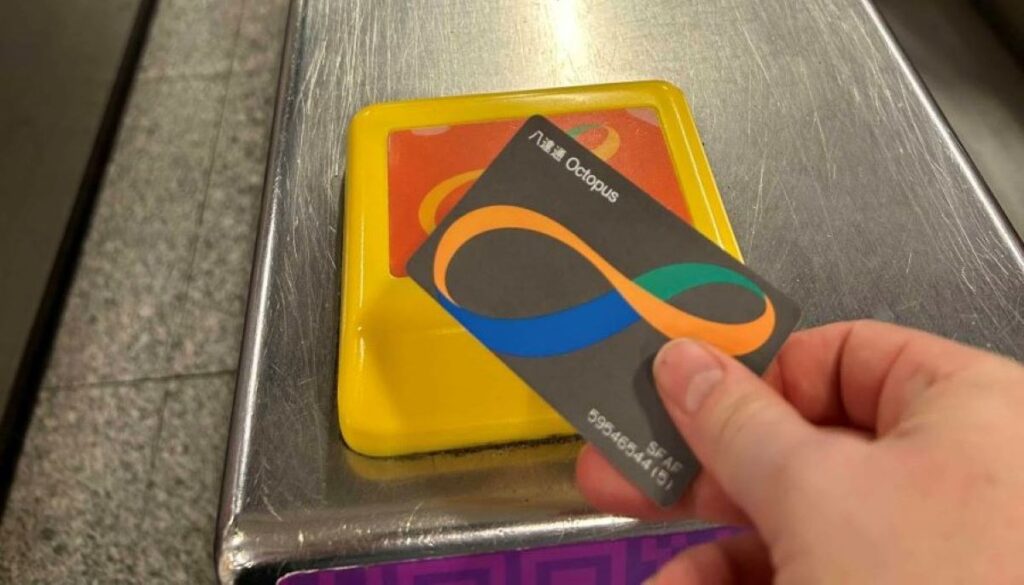
The easiest way to pay for most everyday transport in Hong Kong is with a Tourist Octopus card. You can use it on the MTR, trams, buses, ferries, and in many convenience stores, coffee shops and other small businesses.
I think Octopus is the simplest option because you don’t have to think too hard about which payment method works where. You just tap in, tap out, and get on with your day.
Make transport easier: If you want to sort this before you arrive, you can book a Tourist Octopus Card in advance and collect it when you land. It is the easiest option if you plan to use the MTR, trams, buses and ferries during your trip.
The one exception, for me, is the Airport Express. Although you can use Octopus on the Airport Express, I usually buy separate Airport Express tickets instead, often as a return ticket if I know I’ll be using the train both ways.
There are two reasons for this. First, return Airport Express tickets can work out slightly better value than buying two separate single journeys. Second, I find it easier to keep my airport transport separate from my everyday Octopus card. That way, if I refund or cash out my Octopus card in the city before leaving, I still have my Airport Express ticket ready for the journey back to the airport.
You can also use some contactless credit cards, mobile payments and single tickets on parts of the transport system, but I still recommend having an Octopus card for everyday travel. It makes Hong Kong much easier.
I would also carry a small amount of cash. Hong Kong is much more card-friendly than it used to be, but cash can still be useful for taxis, small purchases, older machines, markets, or if your card does not work for some reason.
If fares or payment options matter to you, check the official transport websites before you travel because Hong Kong payment methods have been changing quickly.
For a more detailed breakdown of Octopus, contactless cards, cash and single tickets, read my guide to how to pay for public transport in Hong Kong.
In each section below, I’ll explain the easiest way to pay for that specific type of transport.
MTR: The Easiest Way to Get Around Hong Kong

The Hong Kong MTR is the easiest, cleanest and most convenient transport system I’ve used anywhere in the world. You’ll find yourself zipping all over the city without stress from day one.
MTR stands for Mass Transit Railway, and it is the main train system most visitors use to get around Hong Kong. If you stay near an MTR station, you can reach many of the city’s main neighbourhoods, attractions, markets, shopping areas and ferry piers without needing to rely on taxis or buses.
I’ve used the MTR hundreds of times over the past 45 years, and it is still one of my favourite things about the city. You don’t need to plan your whole day around transport in Hong Kong. The MTR trains are frequent, the stations are clearly signposted, and once you understand the basics, the system is easy to use even on a first trip.
👉 If you want screenshots, exits, payment gates and a real example journey, my full guide to how to use the Hong Kong MTR walks you through it step-by-step.
Why the MTR is so easy for visitors
The MTR works well because it is simple, logical and reliable. Every station has signs in English and Chinese, and announcements are made in Cantonese, Mandarin and English. The system map is colour-coded, which makes it much easier to follow than it first looks.
For most first-time visitors, the two most useful MTR lines are:
- Tsuen Wan Line / Red Line — useful for Kowloon areas such as Tsim Sha Tsui, Jordan, Yau Ma Tei and Mong Kok.
- Island Line / Blue Line — useful for Hong Kong Island areas such as Central, Admiralty, Wan Chai and Causeway Bay.
👉 If you’re leaning toward staying on Hong Kong Island, my guide to choosing a boutique hotel on Hong Kong Island will help you understand what to look for.
You may also use the Tung Chung Line if you are heading to Lantau Island for the Big Buddha or Ngong Ping Cable Car.
Even more offbeat things to do in Hong Kong like the Sham Shui Po markets or Chi Lin Nunnery are right off MTR stops. You can easily do a full day of sightseeing across neighbourhoods without needing a taxi once.
But for a first trip, you could spend several days mostly using the Red and Blue lines and still see a lot of Hong Kong.
MTR trains are frequent
You usually won’t wait long for a train, especially on the main urban lines. During the day, trains on busy routes often arrive every few minutes, although waits can be longer late at night or on less frequent lines.
That frequency is one of the reasons the MTR works so well for visitors. You can be spontaneous without feeling as though one missed train has ruined your plan.
MTR exits matter
This is the one thing I really want first-time visitors to understand: MTR exits are not interchangeable.
Many stations have several exits labelled A, B, C, D and so on, often with smaller exits such as A1 or A2. The difference between two exits can be several streets, a footbridge, a shopping mall, or the wrong side of a major road.
Before you leave the station, check the exit signs or station map and look for the attraction, hotel, ferry pier or street you actually want. Choosing the right exit can save you a hot, confusing walk above ground.
Where the MTR can take you
The MTR can get you close to many of Hong Kong’s most useful first-time visitor areas, including:
- Tsim Sha Tsui for the Star Ferry, Clock Tower, Avenue of Stars and harbour views.
- Mong Kok for markets, shopping streets and food tours.
- Central for the Mid-Levels Escalator, Lan Kwai Fong, Tai Kwun and nearby ferry connections.
- Causeway Bay for shopping, Victoria Park and access to the tram.
- Tung Chung for the Ngong Ping Cable Car to Lantau Island.
- Sham Shui Po for street markets, local food and a more old-school Kowloon feel.
You can easily spend a full day sightseeing across different neighbourhoods without needing a taxi at all.
👉 If you’re still choosing your base, my guide to where to stay in Hong Kong for first-time visitors will help you pick an area that makes getting around much easier.
Is the MTR safe?
Yes. The MTR is one of the reasons I find Hong Kong so easy as a visitor.
Stations are brightly lit, clean and staffed, and even late at night you are rarely alone on a platform. As a woman who has travelled around Hong Kong on my own for decades, I have never felt uneasy using the MTR, including after dark.
As always, use normal city common sense: keep your bag close, know your exit before you leave the station, and avoid standing in the way of commuters during rush hour.
How to pay for the MTR
The easiest way for most first-time visitors to pay for the MTR is with a Tourist Octopus card. You tap in when you enter the station and tap out when you leave, and the correct fare is deducted based on the distance travelled. It’s fast, simple, and works across the whole city. Not just the MTR but also buses, trams, and ferries too.
You can also use single-journey tickets. However, you’ll likely be on and off the MTR so much that messing around with loose change wastes time and can be stressful (i.e. the machine is out-of-order, or there’s a queue).
You can also use some contactless credit and debit cards at designated gates, but I have not done this myself as I want to avoid extra foreign transactions fees on my credit card.
You can also use the Octopus App for Tourists to add a digital Octopus to your iPhone or Apple Watch, which is convenient if you don’t want to collect a physical card. However, some travellers report less favourable exchange rates when topping up through the app.
Overall, I still think the Tourist Octopus Card is the simplest option for most visitors because it also works everywhere and avoids the need to grapple with cash, or tricky tech.
👉 For a full walkthrough with photos, station exits, payment gates and a real example journey, read my step-by-step guide to using the Hong Kong MTR.
Airport Express: The Easiest Way from Hong Kong Airport to the City

The Airport Express is part of the MTR network, but I would treat it separately from the regular MTR because it solves one specific problem: getting from Hong Kong International Airport into the city quickly and easily.
For most first-time visitors, the easiest option is to take the Airport Express to Kowloon Station or Hong Kong Station, then take a taxi from there to your hotel if you have luggage. This is usually much less stressful than dragging suitcases through busy MTR interchanges on your first day.
Easy airport arrival: If you know you want the train, you can book your Airport Express ticket before you land so you can head straight for the city after immigration and baggage claim
The Airport Express is fast, clean, well signposted and easy to use after a long flight. It is not always the cheapest option, especially if you are travelling as a couple or group, but it is one of the simplest ways to start your trip.
👉 If you want to compare all your options for getting from Hong Kong Airport into the city, including private transfers, read my full guide to getting from Hong Kong Airport to the city. It also explains how to decide whether the Airport Express is right for you or whether a private transfer would be easier.
How to pay: You can use an Octopus card, buy an Airport Express ticket, or pre-book a ticket before you arrive.
For a detailed instructions, including where to catch the train, which station to use, ticket options and what to do when you arrive, read my first-timer’s guide to using the Hong Kong Airport Express.
Taxis in Hong Kong: Best for Luggage, Late Nights and Tired Feet

There’s a moment, usually around day three, when your legs are toast, the MTR feels like a hike, and all you want is to get back to your hotel without figuring out exits, staircases or footbridges.
This is when Hong Kong’s taxis really save your bacon.
I’ve been using taxis in Hong Kong for decades, and I still think they’re one of the easiest and safest ways to get around when you need a break from public transport. They’re metered, regulated, easy to recognise, and usually easy to find near MTR station exits, ferry piers, shopping malls and major hotels.
Taxis are not usually my main way to get around Hong Kong — the MTR is too good for that — but they are incredibly useful in the right situations.
Use a taxi when you have luggage, when it’s raining, when you’re tired, when you’re travelling late at night, or when your destination is awkward to reach by train. Don’t use one just because you don’t want to learn the MTR. You’ll spend more money, sit in traffic, and miss out on one of the easiest parts of Hong Kong travel.
Which Hong Kong taxi should you take?
Hong Kong taxis are colour-coded, which sounds more complicated than it really is.
For most visitors, the main thing to remember is this: red taxis are the ones you’ll use most of the time.
- Red taxis operate in the main urban areas, including Hong Kong Island and Kowloon.
- Green taxis operate mainly in the New Territories.
- Blue taxis operate on Lantau Island.
Unless you are heading somewhere more specific, like parts of the New Territories or Lantau, you will probably be using a red taxi for most city journeys.
How much do Hong Kong taxis cost?
Hong Kong taxis are metered, and fares are usually reasonable compared with many other big cities.
Urban red taxis start at around HK$29 for the first 2 km, with the fare increasing as you travel further. Green and blue taxis have slightly different fare structures, but most first-time visitors will mainly use red taxis in the city.
You may also pay small extra charges for things like luggage, tunnels or tolls. These are normal and are usually added to the metered fare.
How to pay for taxis in Hong Kong
Hong Kong taxis used to be very cash-heavy, but this has changed. From 1 April 2026, taxi drivers have been required to provide at least two electronic payment options, including one QR-code payment method and one non-QR option such as Octopus or credit card.
That said, I would still carry some cash as a backup. Rules and real life are not always the same thing, and I don’t want to be standing on a pavement at night arguing with a taxi driver about payment options. Cash is simple, quick and useful to have anyway.
My advice: assume electronic payment should be available, but keep enough cash for at least one taxi ride just in case.
Will Hong Kong taxi drivers speak English?
Some will. Some won’t. Most drivers will recognise major hotels, attractions, ferry piers and MTR stations, but I would not rely on having a full conversation in English.
I always make things easy for myself by keeping screenshots of my hotel address, attractions and restaurant bookings on my phone. If possible, have the destination written in both English and traditional Chinese.
This is especially useful when you’re tired, it’s raining, your phone signal is patchy, or you’re going somewhere less touristy.
Tips for taking taxis in Hong Kong
- Use taxis as a backup, not your whole transport plan. The MTR is usually faster and cheaper for everyday sightseeing.
- Avoid rush hour if you can. Try to avoid taking taxis during rush hours (8-10 a.m. and 5-7 p.m.) to save time and money on the fare. Traffic can be slow, especially around Central, Causeway Bay, cross-harbour tunnels and major business areas.
- Carry your hotel address. A screenshot is enough, but traditional Chinese is even better.
- Keep some cash. Even with electronic payment rules, cash is still a useful safety net.
- Finding a Taxi: While you should have no problem finding a taxi, if you do, many can be located outside or near MTR stations. You can also hail one.
Does Hong Kong have Uber?
Yes, Uber is available in Hong Kong, including in many parts of Hong Kong Island, Kowloon and the New Territories.
Confession time: I’ve never used Uber in Hong Kong. Actually, I’ve never used Uber anywhere. I know that probably sounds odd for someone who has travelled for decades, but I’m cautious by nature. When I’m travelling, I prefer the option that feels most predictable and straightforward.
For me, that has always been Hong Kong’s regular taxi system, the MTR and public transport.
That does not mean you shouldn’t use Uber. Some travellers prefer it because the destination is entered in the app and payment is handled digitally. But because Hong Kong taxis are regulated, metered and generally easy to find, I’ve never felt the need to use Uber here.
For most first-time visitors, I’d learn the MTR first, use taxis when you need a break, and treat Uber as optional rather than essential.
Star Ferry: The Most Scenic Way to Cross Victoria Harbour

The Star Ferry is one of the easiest ways to cross Victoria Harbour, and it also happens to be one of Hong Kong’s classic travel experiences.
This is the rare kind of transport that is both practical and memorable. You can use it to get between Tsim Sha Tsui and Central or Tsim Sha Tsui and Wan Chai, but you also get skyline views, sea breeze, and that old Hong Kong feeling you don’t get from the MTR.
I’ve been riding the Star Ferry since I was a child, and I still think first-time visitors should do it at least once. It is short, simple, cheap and very hard to mess up.
For most visitors, the most useful route is between Tsim Sha Tsui and Central. This is the one I’d choose if you want the classic harbour view, especially if you’re linking a Kowloon sightseeing day with Central, The Peak, Tai Kwun or the Mid-Levels Escalator.
There is also a Wan Chai to Tsim Sha Tsui route, which can be handy if you are staying in Wan Chai or visiting the Convention and Exhibition Centre area.
Where to catch the Star Ferry
You’ll find the main Star Ferry piers in:
- Tsim Sha Tsui — near the Clock Tower and harbourfront promenade.
- Central — at Central Pier 7.
- Wan Chai — near the Convention and Exhibition Centre.
The piers are well signposted, and the process is very straightforward. You go to the right pier, tap in or buy a token, walk through the gate, and wait for the next ferry.
How to pay for the Star Ferry
The easiest way to pay is with a Tourist Octopus card. You can also usually buy a token at the pier if you are paying another way.
If you’re doing it for the views, choose the upper deck. It costs a few cents more than the lower deck, but it gives you the better harbour experience.
The ride only takes a few minutes, but it gives you one of the best low-cost views in Hong Kong: the harbour, the skyline, the ferries, the old pier buildings, and the constant movement of the city around you.
Use the MTR when you’re in a hurry. Use the Star Ferry when the journey is part of the point.
👉 For a full step-by-step walkthrough, including which pier to use, how to pay and what to expect on board, read my guide to riding the Star Ferry in Hong Kong.
Outlying Island Ferries: Best for Easy Day Trips

Once you’ve used the Star Ferry, Hong Kong’s other ferries open up a completely different side of the city.
This is where Hong Kong stops feeling like glass towers and shopping malls and starts feeling like fishing villages, beaches, seafood restaurants, walking trails and small island communities.
When I was living in Hong Kong as a kid, my family would take weekend ferries to the outlying islands for picnics or swimming, and the boats were a lot more basic: plastic benches, diesel fumes, and sometimes cages of live seafood stacked nearby. These days, the ferries are more comfortable, but they still give you that little breather from the crowds and concrete.
For first-time visitors, the three day-trip ferry options I’d focus on are:
- Lamma Island — best for an easy walk, seafood, village atmosphere and a relaxed break from the city.
- Cheung Chau — best for beaches, street food, mango mochi, harbourfront wandering and a classic island day out.
- Lantau / Mui Wo — useful if you want to combine ferry travel with a slower side of Lantau, although many first-timers use the MTR and Ngong Ping Cable Car for the Big Buddha instead.
The outlying island ferries leave from the Central Ferry Piers, which makes them easy to add to your itinerary if you are staying in Central, Sheung Wan, Wan Chai, Tsim Sha Tsui or anywhere with good MTR access.
Some routes have both fast ferries and ordinary ferries. Fast ferries cost more but get you there quicker. Ordinary ferries are slower, cheaper and often more enjoyable if you like the journey itself. If there is an outdoor deck, that is where I’d sit for the views.
The main thing to watch is the return timetable. Ferries are straightforward, but they are not like the MTR where you can just turn up every few minutes. Check the return ferry time before you wander off for lunch, a walk or a swim, especially if you are visiting later in the day.
How to pay: Octopus is usually the easiest option for Hong Kong ferries.
For more detail on routes, piers, timings and which island to choose, read my Hong Kong day trip ferries guide to Lamma, Cheung Chau and Lantau.
What about the Macau ferry?
You can also take a ferry from Hong Kong to Macau, but I would treat that as a separate day trip rather than part of getting around Hong Kong.
Macau is worth considering if you have a longer stay and want a mix of Portuguese history, old streets, casinos, and very good food. Just remember that the logistics are more involved than catching a local ferry to Lamma or Cheung Chau. You’ll need your passport, you’ll go through immigration, and you’ll want to check ferry times before you commit.
For most first-time visitors, I’d focus on Hong Kong first. But if you have enough time, read my Macau itinerary for how to plan the trip properly.
Buses in Hong Kong: Not My First Choice for Visitors

Hong Kong has an enormous bus network, including big double-decker buses and small local minibuses (pictured above) that zip around the city.
They look fun. They are useful. Locals use them constantly.
But here’s my honest advice for first-time visitors: don’t make buses your main way of getting around Hong Kong.
This is not because Hong Kong buses are bad. They’re not. It’s because the MTR is usually much easier, faster and less stressful if you’re new to the city. With the MTR, the stations are clearly marked, the routes are colour-coded, and you can usually work out where you are going without too much drama.
Buses can be different. Routes are not always obvious, stops can be confusing, and the return journey may not follow the same path you expect. When you’ve been sightseeing for eight hours, that is not the moment you want to discover you’re standing at the wrong bus stop, on the wrong side of the road, waiting for a bus that is never coming.
I am speaking from personal experience here.
Why I don’t recommend minibuses for most tourists
The simple truth is that figuring out where Hong Kong minibuses are going can be a real challenge.
They are useful for locals, but they are not especially beginner-friendly. There often isn’t a clear timetable, the stops are not always well marked, and using one can feel like a game of trial and error if you don’t already know the route.
Many drivers do not speak much English, so don’t count on them for directions or help. And if you do decide to use a minibus, don’t assume the return journey will be as simple as catching one on the other side of the road. Routes can be confusing, and the way back may not follow the same path you expect.
I once tried to use a minibus after a long day out, assuming I could simply catch the return route from the opposite side of the road. I couldn’t. The stop wasn’t obvious, the route information wasn’t clear, and by that point I was tired, hot and in no mood to play transport detective. That was enough for me. Unless you know the route, I wouldn’t make minibuses part of your first Hong Kong transport plan.
What about double-decker buses?
Double-decker buses are easier than minibuses, and some routes are genuinely useful. They also give you a great view if you sit upstairs at the front.
But for everyday sightseeing, I still wouldn’t use them as your default transport. They can be slower than the MTR, traffic can be painful, and the route back may not be as simple as catching a bus from the opposite side of the road.
If you’re confident with apps, maps and bus stops, you may find them perfectly manageable. But if this is your first Hong Kong trip and you want the least stressful option, use the MTR for most journeys and save buses for the routes where they really make sense.
For me, there are two big exceptions: The Peak and Stanley.
The Peak Bus: No. 15
The first bus I actively recommend is the No. 15 bus to The Peak.
This is one of my favourite ways to get to Hong Kong’s most famous lookout. The bus winds its way up through the hills above Central, with views over the city, harbour, racecourse and mountains as you climb.
If you want the best experience, try to sit upstairs near the front. It’s cheap, scenic and drops you right at The Peak.
I usually prefer taking the No. 15 bus up to The Peak because the journey itself feels like part of the experience. You can always take the Peak Tram back down if you want to try both.
For full details on where to catch it and how to plan the trip, read my Victoria Peak guide.
Stanley Buses: No. 6, 6X or 260
The second bus route I recommend is the bus to Stanley.
Stanley is known for its market, waterfront restaurants, relaxed seaside feel and views across the south side of Hong Kong Island. Getting there by bus is part of the fun because the route takes you past some of Hong Kong’s best coastal scenery.
The main buses to know are No. 6, 6X and 260 from Central. These routes take you towards Stanley, with views of places like Deep Water Bay, Repulse Bay and the green hills of the south side.
If you are nervous about buses, Stanley is one of the few trips where I think it is worth giving them a go. The route is scenic, the destination is popular, and the journey gives you a completely different view of Hong Kong.
How to pay for buses in Hong Kong
The easiest way to pay for Hong Kong buses is with a Tourist Octopus card. Tap when you board.
For most visitors, that is another reason to get an Octopus card early in your trip. It means you can use buses when they make sense without worrying about coins, exact fares or payment confusion.
My advice on buses
Use buses selectively.
Use the MTR when you want the easiest and most reliable way to get around. Use buses when the journey itself is scenic, useful or part of the experience.
For a first-time visitor, that usually means using buses for The Peak, Stanley, and maybe the odd route where your hotel or destination makes it obvious. Otherwise, don’t feel guilty about skipping them. Hong Kong gives you plenty of easier ways to move around.
Trams: Slow, Cheap and Full of Hong Kong Character

Hong Kong trams are well used by locals and surprisingly handy when you just want to go a few stops, rest your feet, or watch the city roll past from upstairs.
Catching a tram in Hong Kong, affectionately known as a Ding Ding because of the bell, is well worth doing at least once. They are cheap, iconic and surprisingly relaxing.
These double-decker trams have been clattering through Hong Kong Island for more than a century. They are not fast. But if you have time and want a front-row seat to everyday Hong Kong, this is it.
The fare is a flat HK$3.30 for adults, which makes it one of the best-value rides in the city. You board at the back, pay when you get off at the front, and use your Octopus card, contactless payment or exact cash.
For the best experience, go upstairs and sit near the front if you can. I also like pulling down the window for photos because you don’t get the same glass glare you get in a bus or taxi.
For a more detailed walkthrough, read my full Hong Kong tram guide.
My favourite Hong Kong tram route for sightseeing
My favourite tram route for first-time visitors is Causeway Bay to Kennedy Town.
It’s a slow roll through Wan Chai, Admiralty, Central and Sheung Wan, with skyscrapers, older shopfronts, colonial buildings, bamboo scaffolding, dried seafood shops, local commuters and plenty of everyday Hong Kong life along the way.
This is not the fastest way to cross Hong Kong Island. That would be the MTR. But the tram gives you the street-level version of the city, and that is exactly why I like it.
The tram lines run along the northern side of Hong Kong Island, including roads such as Hennessy Road, Queensway and Des Voeux Road. If you are near the waterfront, head inland for a few minutes and you will usually find the tracks easily enough.
When to ride a Hong Kong tram
Use the tram when you are sightseeing, resting your feet, taking photos, or moving slowly between nearby neighbourhoods on Hong Kong Island.
Do not use the tram when you are in a hurry. They are slow, they stop often, and they can get crowded at peak times. If you are trying to make a booking, catch a ferry or get somewhere quickly, use the MTR instead.
What about the Peak Tram and TramOramic?
The ordinary Hong Kong trams are different from the Peak Tram and the TramOramic Tour.
The Peak Tram is the historic funicular that runs up to Victoria Peak. I usually prefer the No. 15 bus up to The Peak for the views, but the Peak Tram is quicker on the way back down.
The TramOramic Tour is a sightseeing version of the tram with an open-top deck and audio guide. It can be a good option if you want a more structured ride, but you do not need it to experience the regular Ding Ding trams.
For most first-time visitors, I’d keep it simple: ride a normal tram on Hong Kong Island, sit upstairs, don’t rush, and enjoy the view.
Walking Hong Kong: The Best Way to Discover Local Life
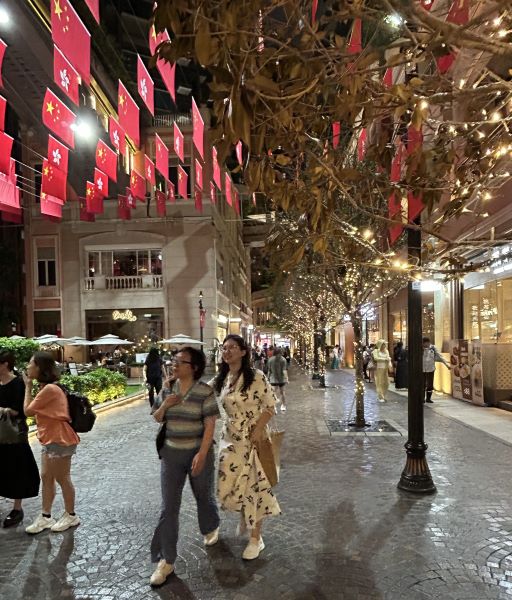
There’s no better way to get a feel for Hong Kong than by walking its streets. Lord knows I’ve clocked hours and hours on foot, wandering through markets, old world laneways and Hong Kong’s urban parks.
Hong Kong is compact, highly walkable and safe for tourists, including at night. You’ll find English street signs everywhere, and most tourist-friendly areas, from Tsim Sha Tsui to Causeway Bay, are relatively flat and easy to navigate. Walking lets you stumble across the kinds of places no guidebook will tell you about.
Navigating On Foot Like a Local
If you’ve got a specific destination in mind, like a restaurant, study the map before you head out and take a screenshot. Hong Kong streets can feel like a maze, and it’s easy to get turned around, especially in neighbourhoods like Sheung Wan or Mong Kok where streets twist and double back.
Getting lost isn’t a disaster, you’re safe, and someone will always help, but it can be maddening when you’re tired and hungry (I’ve been there more times than I like to admit).
Map tip: If you rely on Google Maps when you travel, set up an eSIM for Hong Kong before you arrive. It makes MTR exits, walking routes, ferry piers and taxi addresses much easier from the moment you land.
Don’t Skip the Steep Bits
One thing I really want to flag: Central, Sheung Wan and Wan Chai are hilly. And a lot of people miss out on what’s up top because they assume it’s not worth the climb. But trust me, it is.
Think of these three areas like a layered rice terrace. Those steep little side streets often lead to cool local bars, art spaces, and leafy parks. Take your time, pause when you need to, and treat it like urban hiking.
👉 If you want a structured route through one of those hilly areas, use my Central Hong Kong walking guide.
My Practical Walking Tips
✔️ Shoes matter: Bring both sneakers and breathable sandals. Your feet will thank you. I love my Katmandu sandals, and always carry plasters (Band-Aids) just in case.
✔️ Stay hydrated: Hong Kong’s treated tap water meets official standards, but water quality can depend on the building. You’ll find cheap bottled water at every 7-Eleven, and some parks and public areas now have filtered refill stations. On my last trip, I carried a little thermos of tea and used it constantly. There’s nothing better than a quiet sit-down in a park with a cuppa.
✔️ Take breaks: It’s easy to overdo it. Grab a seat whenever you find one, though public seating can be scarce, especially on Sundays when domestic workers gather in parks.
✔️ Toilets: The bathroom situation has improved hugely in recent years. Your best bets are hotel lobbies, MTR stations, malls, and public parks. Just ask if you’re in a mall. The signage is usually terrible. Also, bring your own tissues and be prepared to wait, especially on weekends.
Walking is best once you are already in a neighbourhood. Use the MTR to get across the city, then slow down and explore on foot.
For more detail, including how to pace yourself, where to rest and what to expect on the streets, read my full guide to walking in Hong Kong.
What to Do Next
Getting around Hong Kong is much easier once you stop thinking of it as one big transport system and start using each option for what it does best. Use the MTR for everyday sightseeing, the Airport Express for arriving from the airport, the Star Ferry and trams when the journey is part of the experience, buses for places like The Peak and Stanley, and taxis when you’re tired, carrying luggage, or travelling late.
Your next step is to make the practical parts easy before you arrive. Start with my guide to how to pay for public transport in Hong Kong, then read my Hong Kong Tourist Octopus Card guide so you know exactly what to buy and how to use it.
If you’re still planning the shape of your trip, my 3 day Hong Kong itinerary for first-timers will help you group your sightseeing by area so you’re not crossing the city back and forth all day.
Hong Kong Transport FAQs
Do I need an Octopus Card in Hong Kong?
You do not strictly need an Octopus Card, but I recommend getting one for a first trip. It makes paying for the MTR, buses, ferries and trams much easier, and you can also use it in many shops and convenience stores.
Read my full guide to the Hong Kong Tourist Octopus Card if you’re unsure which one to buy.
What is the cheapest way to get around Hong Kong?
The cheapest options are usually trams, the Star Ferry and some buses, depending on the route. The MTR is not always the absolute cheapest, but it is often the easiest and best-value option for first-time visitors.
For more details on paying, read How to Pay for Public Transport in Hong Kong: All Options Explained.
How do Tourists get around Hong Kong?
Most tourists use the MTR for everyday sightseeing, the Airport Express from the airport, ferries for harbour and island trips, trams for sightseeing on Hong Kong Island, and taxis when they are tired or carrying luggage.
You do not need to rent a car in Hong Kong.
What apps do I need for getting around Hong Kong?
You do not need many apps to get around Hong Kong. Google Maps is excellent and works well in Hong Kong, and the MTR Mobile app can be useful if you want extra help with train routes, exits and station information.
I’d also keep your hotel address saved in your map app, especially for taxis or late-night journeys.
✈️Travelling Soon?
These are the travel tools and booking sites I personally use and recommend most often when planning a trip to Hong Kong:
Travel Insurance: I use Visitor Coverage to compare travel insurance policies side-by-side before I book.
Flights: I search flights using Expedia to compare prices and routes.
Hotels: I book most of my Hong Kong hotels through Booking.com because the free cancellation policies are often really flexible.
eSIMs: I use Airalo for mobile data in Hong Kong and China. It’s easy to set up before you land.
Airport Express Tickets: I usually book Airport Express tickets through Klook because the QR-code entry makes arrival much smoother after a long flight.
