How To Use Hong Kong Trams: Fares, Routes and Step-by-Step Instructions


Disclosure: This article contains affiliate links. See the Disclosure Policy.
Thinking of riding the public Hong Kong tram? Good call. The tram (or the “ding ding” as locals call it) isn’t the fastest way to get around, but it’s cheap, scenic, and a great way to rest your feet while seeing the city like a local.
I’ve been using the trams since the 1970s, first as a kid living here, now as a visitor who keeps coming back. They’re easy to figure out once you know the basics.
This post breaks down when to use them, where to get on, how to pay, and why they’re worth trying, even if it’s your first time in Hong Kong.
✨Easy paid activities to add to your Hong Kong itinerary
These bookable experiences also work well for first-time visitors:
- Big Buddha Day Trip Guided — an easy way to visit one of Hong Kong’s most iconic sights.
- My Favourite HK Food tour — a perfect way to try some famous Hong Kong snacks like pineapple buns and dumplings.
- Peak Tram — an iconic way to reach Victoria Peak and enjoy some of Hong Kong’s best skyline views.
- Dark Side of Hong Kong Tour — a fascinating walking tour that explores Hong Kong’s hidden side, including subdivided flats
- Disneyland or Ocean Park — excellent options to keep the kids entertained.
- Big Bus Hong Kong — useful for an easy city overview, with a stop close to Star Ferry pier.
Hong Kong tram essentials
Fare: HK$3.30, regardless of distance
Board: Through the rear doors
Pay: When leaving through the front
Best payment method: Tourist Octopus card
Where they run: Across northern Hong Kong Island
Best for: Short journeys, sightseeing and resting your feet
*For the most to-to-date information, refer to the official Hong Kong Tramways website.
🚍Want an easier sightseeing option?
The public tram is brilliant for a cheap local experience, but it is not designed to help visitors see all of Hong Kong’s major sights. For a more structured overview, the Big Bus gives first-time visitors a hop-on, hop-off route with stops near several popular attractions.
👉 Check Big Bus Hong Kong tickets and routes here
When to Use Hong Kong Trams (and When Not To)

My advice is don’t go using the public trams as your main way of getting around Hong Kong. They’re not really built for that.
Hong Kong trams are slow, stop at nearly every block, and only run on Hong Kong Island, not Kowloon. During rush hour, they fill up fast and crawl through traffic. If you’re trying to get somewhere on time, or covering any real distance, the MTR is your best friend—fast, clean, and super easy to use.
But that doesn’t mean the tram isn’t worth your time.
It’s great for when you’re walking the island and just need to rest your feet, or want to jump a few stops ahead without diving underground. It’s also one of the cheapest and most scenic ways to soak up daily life: street markets, neon signs, old-school shopfronts, and locals going about their day.
So no, don’t rely on it as your main mode of transport. But do ride it at least once. Especially if you can grab a window seat upstairs.
👉 If you want to see several major attractions without planning every transport connection yourself, check Big Bus Hong Kong tickets and routes here.
Where to Catch Hong Kong Trams
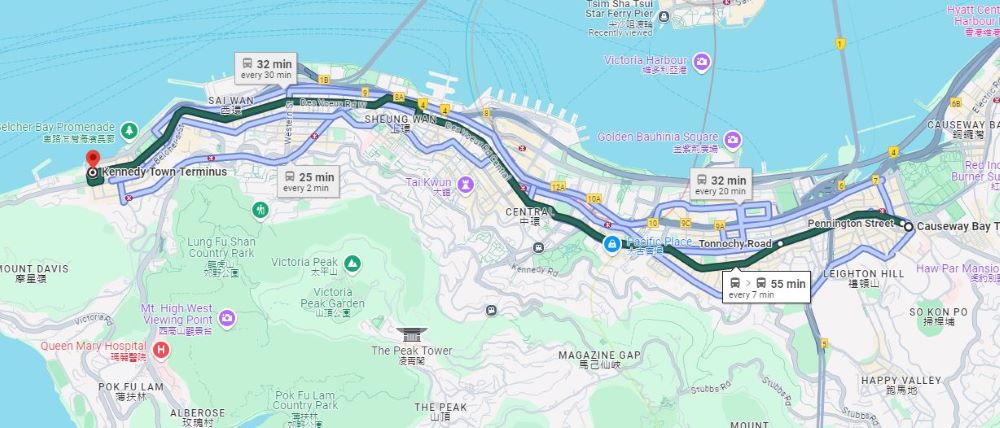
Hong Kong’s public trams run across the northern side of Hong Kong Island, with six main routes operating between Kennedy Town in the west and Shau Kei Wan in the east.
You’ll find tram stops along major roads through neighbourhoods such as Kennedy Town, Sai Ying Pun, Sheung Wan, Central, Admiralty, Wan Chai, Causeway Bay and North Point.
The stops are positioned on small islands or beside the pavement and display the destinations served. Eastbound and westbound stops are usually on opposite sides of the road, so check the destination shown on the front of the tram before boarding.
👉 Before your trip, read these essential Hong Kong travel tips for first-time visitors so you know what to expect when using public transport.
Which is the Best Tram Ride in Hong Kong?

While I don’t recommend public trams for getting around generally, they’re absolutely fabulous for sightseeing (and unbelievably cheap).
Causeway Bay to Kennedy Town Tram Route
The best tram ride in Hong Kong is the route from Causeway Bay to Kennedy Town.
This route takes you through some of the most interesting parts of the island—Wan Chai, Admiralty, Central, Sheung Wan—before ending in the quieter, more laid-back streets of Kennedy Town.
Along the way you’ll see modern skyscrapers, local markets, neon signs, and a slice of daily life all in one ride.
The ride takes about 45-60 minutes, depending on traffic, and offers plenty of opportunities to snap photos or simply soak in the atmosphere.
🚋 PRO TIP: Sit upstairs and pull down the window. I have captured many amazing shots that way (from a unique vantage point and without the reflection of glass you will get on a bus or car window).
Just Want the Experience? Any Tram Will Do
If you just want a bit of fun, any tram route is good.
Trams run so often—and stop so frequently—that it’s easy to hop on wherever you are, ride for a few blocks, and hop off again. If you end up heading the wrong way, just get off and walk back. No stress, no real risk of getting lost.
If you’re doing one of the walking tours in Wan Chai, Central, or Causeway Bay, trams are a great way to break things up. Let’s say you’ve finished the Central walking route and want to get over to Causeway Bay, just jump on a tram heading east. Easy.
Aside from the full scenic ride from Causeway Bay to Kennedy Town, you’ll mostly just use the tram to skip a few blocks or rest your legs. Think of it as a bonus experience, not your main way of getting around.
How to Catch a Hong Kong Tram

Make your way to the tram lines. You’ll see Hong Kong tram maps located there.
Trams don’t have specific route numbers but the destination is clearly marked on the front of the tram instead.
For the longer sightseeing journey I recommend, wait for a westbound tram displaying “Kennedy Town” as its destination. Not every tram from Causeway Bay travels all the way there, so check the destination on the front before boarding.
When one arrives, there’s no need to flag it down because it will stop automatically.
Unlike the buses, you get on at the rear of a tram, not the front.
You pay your fare when you get off (you exit out the front), so there’s no need to grapple with loose change or your Tourist Octopus Card at this stage.
Where to Sit on the Tram

If you’re only taking the tram for a few stops, I recommend staying downstairs so you can hop off quickly.
But for a longer journey, definitely head upstairs to find a seat.
Upstairs gives you wide views from both sides of the tram, making it one of the best places to watch the city and take photographs.
It’s the perfect spot to take in all the sights and snap some amazing photos.
I can’t tell you how much fun this is! It’s such a chilled way to see the city buzzing below. Even the local passengers are transfixed by what’s going on outside. No one’s on their phones (unlike the MTR) because they are too busy looking out the window.
If you enjoy sightseeing from the upper deck, you may also like these Hong Kong double-decker bus rides that are actually worth taking.
How do you Pay for Trams in Hong Kong?
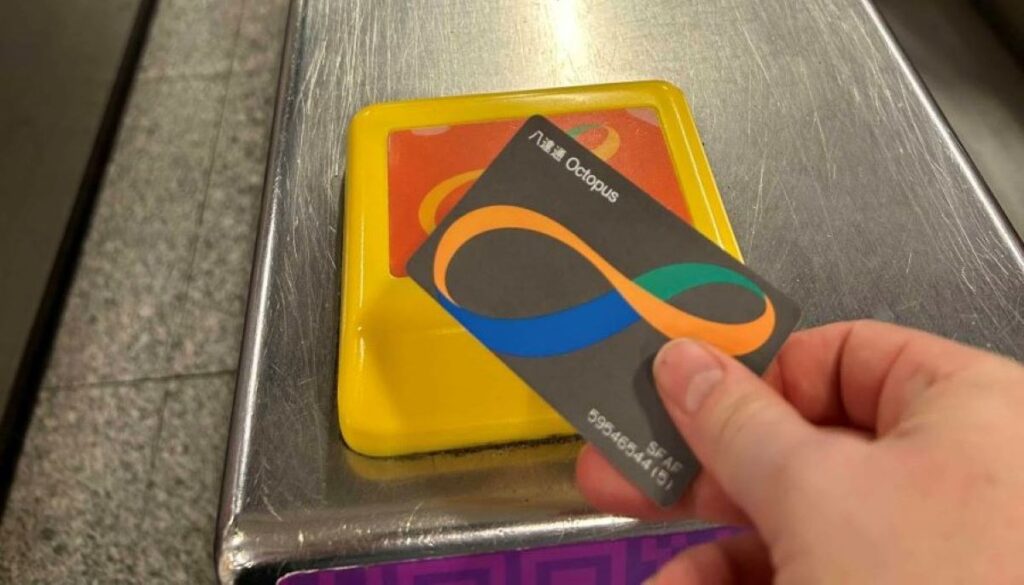
Hong Kong trams do not have tickets (most forms of Hong Kong transport don’t use tickets as a payment method). Instead, the usual way to pay is with the Tourist Octopus Card or cash.
Hong Kong trams also now accept contactless bank cards and mobile wallets, including Visa, Mastercard, UnionPay, JCB, American Express, Apple Pay and Google Pay.
This is a useful backup if you do not have an Octopus card, although your bank may charge a foreign-transaction fee.
If you pay with cash, you must have the exact fare. You can pay more if you don’t have the exact amount, but you won’t get change.
The Hong Kong tram fare is a flat rate of HK$3.30, regardless of how far you travel.
You pay when you disembark, not when you board.
My guide to paying for public transport in Hong Kong explains the Octopus card, contactless payments and other options in more detail.
Why the Tourist Octopus Card Is So Useful for Visitors
✓ Works on the MTR, buses, trams, ferries and convenience stores
✓ Order it before your trip and collect it at Hong Kong Airport
✓ No deposit or account setup required
✓ The Klook package includes HK$50 of stored value
✓ Keep it at the end of your trip—there’s nothing to return
✓ Get a refund on any unused balance
It’s a particularly good option for first-time visitors, short stays and layovers, or anyone who wants their transport sorted before landing.
How to Get Off a Hong Kong Tram

The trams automatically stop at each stop, so there’s no need to press a bell (this constant stopping is why the trams are a bit slow).
Just get off at your desired location. And don’t worry about getting lost—tram stops are close to one another, so you can easily double back on foot if needed.
You exit out the front not the back.
And before you get off, you must pay, either with cash, your Tourist Octopus Card or contactless credit card payment.
Hong Kong Tram Operating Hours and Timetables

The public-tram timetables run roughly from 6 a.m. until midnight.
Trams run with varying frequency so I would recommend rather than trying to catch one at a particular time, simply head to a tram station and wait for the next one to arrive.
Is the Hong Kong Tram Worth Riding?
Yes—especially if it’s your first time in Hong Kong.
The tram is slow, but that’s part of the appeal. It’s cheap, easy to use and a fun way to see everyday life from the top deck.
I wouldn’t use it for long journeys or when you’re in a hurry. For those trips, the MTR is usually the better option.
But for a relaxed ride through neighbourhoods such as Causeway Bay, Wan Chai and Central, it’s absolutely worth doing at least once.
If you’d prefer a more organised sightseeing route with stops near major attractions, take a look at the Big Bus Hong Kong sightseeing tour.
Frequently asked questions about Hong Kong public trams
Are Hong Kong trams better than buses?
They serve different purposes but for most first-time visitors, I’d say skip the buses unless you’re heading somewhere specific like The Peak or Stanley.
Hong Kong’s bus system is massive and efficient, but the routes can be confusing if you’re new to the city. Stops aren’t always well-marked, and unless you know exactly where you’re going, it’s easy to miss your stop, or end up on the wrong level of a double-decker.
Trams, on the other hand, are simple. One flat fare, slow pace, and they only run on Hong Kong Island, so it’s hard to get too lost. They’re great for short hops, scenic views, or just giving your feet a break.
My advice is to use the MTR for getting around, take the tram for the experience, and save buses for specific routes like Bus 15 to The Peak or the Stanley-bound buses from Central or Causeway Bay.
Are trams in Hong Kong free?
No, trams in Hong Kong aren’t free, but they’re incredibly cheap.
The standard fare is a flat HKD $3.30, regardless of distance. You pay when you get off, either with your Octopus Card or exact cash. (No change given).
Occasionally, the Hong Kong government runs free tram ride days. These are usually tied to public events or promotions, but are rare and not something to plan around.
For the everyday traveller, it’s still one of the best-value ways to see the city.
What are the trams called in Hong Kong?
Locals call them the “ding ding”, named after the classic double-bell chime they make when pulling into stops.
Officially, they’re just called Hong Kong trams or the tramways, but if you say “ding ding,” everyone knows what you mean.
Other easy first-timer activities
These are some of the most popular sightseeing activities for a first-time visit to Hong Kong:
- Victoria Peak for Hong Kong’s most famous skyline view
- Stanley for a relaxed seaside outing
- The Star Ferry for a quick harbour experience
- Exploring Markets for street food, local colour and everyday city life
- A museum visit for a rainy or very hot day
