Hong Kong History for First-Timers: What You Should Know Before You Go


Disclosure: This article contains affiliate links. See the Disclosure Policy.
Thinking of visiting Hong Kong and curious about what makes this city tick? Start with its history.
Hong Kong’s history will help you make sense of why some streets still carry British names, why temples sit next to 7-Elevens, and why Hong Kong feels unlike anywhere else in Asia.
Once you know the backstory, the trade wars, shifting empires, the cultural mashups, everything clicks into place. You’ll start to see how the past shows up in the present, everywhere from the tram routes to the tea shops.
I grew up in Hong Kong in the 1970s and have been returning for over 45 years. Here’s what I’ve learned: the more history you understand, the more rewarding your trip will be.
Don’t worry, this post isn’t a deep dive into dusty textbooks. Think of it as the Hong Kong history cheat sheet that every first-time visitor wishes they had.
I’ll walk you through the key turning points, from sleepy fishing villages to colonial treaties to the 1997 handover, and show you where to feel that history for yourself when you land.
Hong Kong Planning At A Glance
Don’t have a lot of time? Here’s a mini first-timers guide to Hong Kong.

Where to Stay:
– The Kowloon Hotel (Best location & MTR access)
– The Mira (Best facilities)
– The Royal Garden (Best quiet hotel)
Best First-time Experiences:
– Star Ferry
– The Peak
– Big Bus Tour
– HK Foodie Tour
– Big Buddha
HK Essentials:
– HK Airport Express tickets
– Tourist Octopus Card
– Best HK eSIM
– Compare Travel Insurance
📌Hong Kong’s History in Brief
Hong Kong’s history is one of the reasons the city feels so different from anywhere else in Asia. What started as fishing villages and trading ports became a British colony after the Opium Wars, later expanding into Kowloon and the New Territories. The city endured Japanese occupation during World War II before returning to China in the 1997 handover as a Special Administrative Region.
You still feel all of that history when you visit Hong Kong today. It’s there in the old temples squeezed between skyscrapers, the British-era buildings in Central, the double-decker trams rattling through the city, the Cantonese food culture, and the fast-moving finance-driven energy that makes Hong Kong feel unlike anywhere else.
Quick Timeline Table
| Period | What happened | Where to see it today |
|---|---|---|
| Pre-colonial | Fishing villages, Hakka settlements | Tai O, Sam Tung Uk |
| 1842–1898 | British colonial expansion | Flagstaff House, 1881 Heritage |
| 1941–1945 | Japanese occupation | Sai Wan War Cemetery, Lei Yue Mun Fort |
| 1997 | Handover to China | Golden Bauhinia Square |
Before the British: Fishing Villages and Shrimp Paste Legacy

Hong Kong wasn’t always a global finance hub.
For centuries, it was a collection of quiet coastal villages, with indigenous groups like the Tanka (fisherfolk, often born and raised on boats) and the Hakka (agriculturalists who settled inland).
These groups weren’t just “pre-colonial footnotes”. They were the backbone of early life here.
The Tanka built stilt houses above the tidal flats. The Hakka cleared the land and raised pigs in walled villages. Both groups lived close to nature, and closer still to the rhythms of the sea.
You can still see pieces of this in places like Tai O, a photogenic fishing village on Lantau Island. But it’s not just about the visuals. Look closer, and you’ll find shrimp paste workshops, old salt pans, and local grannies sun-drying fish on bamboo racks.
💡 Side note: If you’re visiting the Big Buddha or doing the Ngong Ping cable car, carve out an extra hour or two for Tai O. You’ll thank yourself later.
At the time, the region was part of southern China’s maritime trade routes. Fishermen and traders from the Pearl River Delta used the harbour as a pit stop on their way to Southeast Asia.
Hong Kong’s deep natural harbour made it valuable. And vulnerable. That vulnerability would later be tested in the 19th century.
Even today, Victoria harbour remains central to daily life and one of the best ways to experience this is by riding the Star Ferry.
📍 Want quieter, grounded museums that show this rural heritage?
- Sam Tung Uk Museum (a walled village preserved in Tsuen Wan)
- Sheung Yiu Folk Museum in Sai Kung (small, remote, and wonderfully unpolished)
The Opium Wars: A Trade War in Disguise

By the early 1800s, Britain had developed a serious tea obsession. Not a little Earl Grey here and there, but boatloads of Chinese tea, especially from Canton (now Guangzhou).
But there was a problem for the British. China wasn’t particularly interested in what Britain had to offer in return. They didn’t want British goods. They wanted silver. And lots of it. So to keep the tea flowing, Britain had to pay up.
That didn’t sit well with British traders. To balance the books, they flipped the trade: smuggling opium into China from British-controlled India. It worked. Addiction spread, and demand for opium soared.
China’s ruling dynasty pushed back hard. And what came next would shape Hong Kong’s fate.
In 1839, the emperor sent Commissioner Lin Zexu to Canton to shut things down. He seized and destroyed massive British opium stockpiles, over 1,000 tons of it, then banned the trade completely.
Britain responded by declaring war. Twice.
The First Opium War (1839–1842) ended with Britain winning and China signing the Treaty of Nanking. That’s how Hong Kong Island ended up in British hands. “In perpetuity,” as the treaty phrased it.
More land grabs followed:
What started as a trade workaround became a colonial foothold. For Britain, Hong Kong was the ultimate free port. A place to dock, trade, and keep an eye on China from just across the water.
For locals, it marked the beginning of over 150 years of outside rule. By a power that didn’t speak their language, follow their laws, or share their priorities. Commerce came first. Community came second.
This is the kind of layered backstory that makes Hong Kong so compelling to visit.
📍 You can still see the colonial footprint today at:
- Flagstaff House now the Museum of Tea Ware, sits tucked into Hong Kong Park (Central). It’s the city’s oldest surviving colonial building. And yes, there’s a certain irony in learning about Chinese tea in a former British officer’s residence.
- 1881 Heritage in Tsim Sha Tsui used to be the Marine Police HQ. These days it’s part of a luxe shopping complex, but you can still spot the old granite walls and that stately clock tower. Reminders of who once called the shots here.
A Colonial City: Booming, Unequal, and Culturally Blended

Under British rule, Hong Kong grew like crazy. The port thrived. Banks and trading houses flourished. Immigrants flooded in. Some seeking work, others fleeing war, famine, or political upheaval in China.
By the early 1900s, Hong Kong was a city of contrasts. On one hand: British institutions, legal systems, private clubs. On the other: working-class tenements, herbal markets, and street-side noodle stalls.
British-style schools, cricket clubs, and colonial architecture sat next to wet markets and incense-filled temples. The city spoke English and Cantonese, ate lunch with both forks and chopsticks.
But life wasn’t rosy for everyone. For much of the 20th century, Hong Kong had no welfare state. Housing was scarce, political power was limited to the elite, and race-based inequality was real.
The only upside? For some, the chaos came with freedom. You could build a life here, even if it was hard.
📍 Want to see this cultural mix in action?
- Walk through Sheung Wan (pronounced “Sheung Waan”) where old Chinese medicine shops sit under restored colonial signage. Possession Street marks the spot where the British first claimed Hong Kong in 1841.
- Step into the Peninsula Hotel (Tsim Sha Tsui). Opened in 1928, this grand old dame is still one of Hong Kong’s most iconic buildings. The British built it to rival the best hotels in Shanghai and Singapore and it shows. Inside, it’s all marble columns, chandeliers, and white-gloved afternoon teas. Outside, it’s still a place where Rolls-Royces (in Peninsula green) glide up to the entrance.
- Head to The Peak. For over a century, Victoria Peak was the exclusive domain of British elites. They escaped the summer heat by building mansions up there. Complete with sweeping views over the harbour and a sharp breeze the rest of the city could only dream of.
Many of these old-meets-new pockets are best explored on foot. Hong Kong’s walkability is where it really shines.
The Japanese Occupation: 1941–1945

On December 8, 1941—just hours after the attack on Pearl Harbour—Japanese forces launched an invasion of Hong Kong.
The Battle of Hong Kong lasted just 18 days. Outnumbered and outgunned, British and Commonwealth forces surrendered on Christmas Day. For the next nearly four years, Hong Kong was under Japanese military rule.
Life under occupation was brutal. Food was scarce. Civil rights disappeared. Public executions were common. Schools were shut.
Entire families were forced into labour camps or simply vanished. Chinese currency was abolished. Even the city’s name was altered to “Heung Kong” (pronounced heung gong). A nod to an older Cantonese pronunciation.
By the time Japan surrendered in August 1945, Hong Kong’s population had dropped by more than half. It’s estimated that over 10,000 civilians died during the occupation, through violence, starvation, forced labour, and disease.
When the British resumed control later that year, they returned to a city that was devastated, but not broken. And Hong Kong, in the decades that followed, would rebuild faster than anyone expected.
🧭 Where to reflect quietly:
- Sai Wan War Cemetery in Chai Wan on Hong Kong Island, is beautifully kept and honours Commonwealth troops who died defending the city.
- Stanley Military Cemetery sits in the seaside neighbourhood of Stanley. Pair it with a walk or seaside lunch to balance reflection with recovery.
- Lei Yue Mun Fort (now the Hong Kong Museum of the War of Resistance and Coastal Defence) on the eastern edge of Hong Kong Island still shows war damage in its concrete bunkers. It’s quiet, overgrown, and surprisingly powerful.
Cultural Revolution Spillover

While mainland China plunged into the Cultural Revolution in the 1960s, Hong Kong became a haven. Refugees poured across the border. Some literally swimming to reach safety.
This refugee wave changed the city again. The mainland Chinese brought not only survival stories, but creativity, grit, and big dreams.
That’s when Hong Kong pop culture took off. Bruce Lee went global. Cantopop (Cantonese pop music) flooded the airwaves. Kung fu movies lit up cinema screens. The city wasn’t just surviving. It was becoming something of its own.
Not quite British. Not quite Chinese. Just…Hong Kong.
📍 You’ll feel this spirit in Yau Ma Tei, home to old cinemas, fortune tellers, and night markets.
📚 Curious to dig deeper into Hong Kong’s story? These 25 Hong Kong books, from gripping memoirs to historical deep-dives and evocative fiction, will give you a much richer feel for the city before you land. Highly recommend if you want more than just surface-level sightseeing.
Public Hangings and the End of the Death Penalty

It’s something most guides skip. But it matters.
Until the mid-1960s, public executions were still held in Hong Kong.
These hangings were staged in prison courtyards visible from surrounding streets.
Eventually, as global norms shifted and local pressure grew, the British colonial government abolished the death penalty (though it remained on the books until 1993, it was never used again after the 60s).
🧭 Where this history is handled sensitively and visually:
- Tai Kwun in Central is a must. The old Victoria Prison has been turned into an art space and cultural hub. But it doesn’t shy away from its past. You can walk through old cells, read execution records, and sit in the prison yard café reflecting on it all.
1984–1997: The Clock Starts Ticking
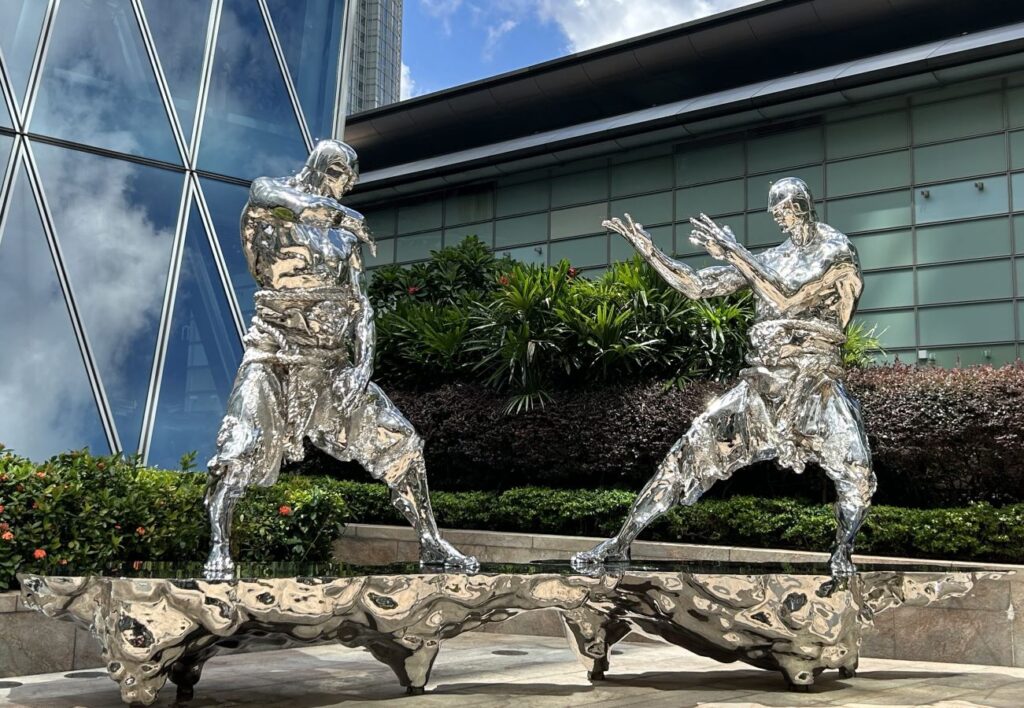
In 1984, the writing was on the wall: the 99-year lease for the New Territories (which make up about 90% of Hong Kong’s landmass) was expiring in 1997. Britain and China signed the Sino-British Joint Declaration, agreeing that:
“Hong Kong would return to China, but retain its legal and economic system, rights, and freedoms for 50 years.”
That’s where “One Country, Two Systems” comes from.
Locals had mixed feelings. Some were hopeful. Others were uneasy. Many families took out insurance policies of a sort: moving abroad temporarily, securing foreign passports, or sending their kids to school overseas.
1997 Handover: Midnight in Hong Kong
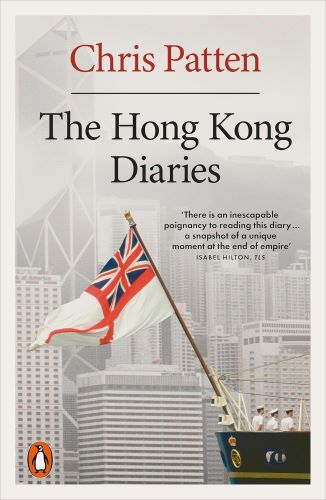
At midnight on July 1, 1997, the British flag was lowered. The Chinese flag was raised. And Hong Kong officially became a Special Administrative Region (SAR) of China.
Fireworks lit up Victoria Harbour. Diplomats gave speeches. Some people cheered. Some cried.
Some just quietly watched from their rooftops or living rooms, unsure what the future would hold.
It wasn’t a revolution. It was a shift. Deep, symbolic, and slow-moving. For many Hongkongers, it felt like a page turning before the next chapter was written.
Since the 1997 handover, Hong Kong has evolved fast—politically, socially, emotionally. You may have seen headlines about protests, new laws, and concerns over freedom of speech.
But for visitors what’s remarkable is what hasn’t changed:
- Pineapple buns still cost under HK$10.
- Incense still coils outside tiny corner temples.
- Trams still rattle through Central at 10 km/h, slower than a jog.
It’s this constant state of flux, where old-school rituals meet big political shifts, that makes Hong Kong such a standout for me, and why I always recommend it as a unique destination to visit.
🧭 Visit the site:
- Golden Bauhinia Square, just outside the Hong Kong Convention and Exhibition Centre in Wan Chai, is where the formal 1997 handover ceremony took place.
Where to Learn More About Hong Kong’s History While You’re There
If you’re the kind of traveller who likes to understand a place while you’re in it, these stops are well worth carving out time for. None are overwhelming, and most take under 90 minutes. Perfect for dipping in, learning something meaningful, and moving on.
Hong Kong Maritime Museum, Central
Overlooked by many, this harbourfront museum is a gem for understanding Hong Kong’s seafaring past and present. From ancient trade routes and pirate tales to container shipping and climate impact, it covers the full arc of how water shaped the city. Bonus: there’s a fantastic view of Victoria Harbour from the top floor café.
📍 Pier 8, Central Ferry Piers.
🚇 Central Station, Exit A, then walk 10 minutes along the elevated walkway toward the Central Ferry Piers.
Tai Kwun, Central
Once a colonial police station and prison, Tai Kwun is now a beautifully restored arts and heritage centre. You can walk through real prison cells, read about public executions, then grab a coffee in the leafy courtyard surrounded by restored granite buildings.
📍 10 Hollywood Road, Central.
🚇 Central Station, Exit D1, then walk 10 minutes uphill via Old Bailey Street.
M+ Gallery, West Kowloon
This world-class gallery blends contemporary art with themes of politics, identity, and architecture. The exhibitions change often, but the harbour views from the rooftop are reliably stunning. A great choice if you like your history with a side of design and perspective.
📍 West Kowloon Cultural District.
🚇 Kowloon Station, Exit E4, then walk 15 minutes.
Hong Kong Heritage Museum, Sha Tin
Not your average museum. You’ll find exhibits on Bruce Lee, Cantonese opera, and local culture that actually feel alive, not dusty. A good choice if you want cultural insight without the crowd crush.
📍 1 Man Lam Road, Sha Tin.
🚇 Che Kung Temple Station, Exit A, then a 5-minute walk.
Kowloon Walled City Park
Once the most densely populated and famously ungoverned place on earth. Today, it’s a quiet green park filled with walking paths, plaques, and old photos showing what life was like in the “City of Darkness.”
📍 Tung Tsing Road, Kowloon City.
🚇 Lok Fu Station, Exit B, then a 15–20 minute walk or a short bus ride (Route 2F).
Lei Yue Mun Fort, Yau Tong
A lesser-known spot that still feels untouched. This coastal military fort features original World War II bunkers and sweeping sea views. Ideal for quiet exploration who enjoy atmospheric ruins.
📍 Lei Yue Mun, eastern Kowloon.
🚇 Yau Tong Station, Exit A2, then a 15-minute uphill walk.
Dr. Sun Yat-sen Museum, Sheung Wan
Small but powerful. This museum offers a clear, engaging look at the revolutionary who helped reshape modern China. It’s an easy addition if you’re already in Central or Sheung Wan.
📍 7 Castle Road, Mid-Levels.
🚇 Sheung Wan Station, Exit E2, then a 15-minute uphill walk or short taxi ride.
Final Thoughts on Hong Kong History
Here’s what I’d say if we were sitting together over milk tea: if you’re planning your first trip to Hong Kong, don’t skip the history.
Add an hour at the Hong Kong Museum of Art or Maritime Museum. Walk through Tai Kwun in Central and notice the old prison walls next to the modern art gallery. Pause at the colonial-era postboxes still standing on city corners. Ride the tram. Not just because it’s scenic, but because it tells a story.
You don’t need to know it all. But knowing a little helps Hong Kong feel less like a puzzle, and more like a city you can actually read.
Let it in slowly. A detail here. A quiet museum there. A conversation with a taxi driver. A temple tucked behind a noodle shop.
History will give your first time Hong Kong trip context. And context makes everything better, from the bowl of noodles you order to the neighbourhoods you choose to explore.
👉 Planning Your First Hong Kong Trip?
These guides will help you plan the logistics, choose where to stay, and avoid common first-timer mistakes:
🛌Where to Stay
- Where to Stay in Hong Kong
- Best Hotels in Tsim Sha Tsui for first-timers
- Boutique Hotels on Hong Kong Island
🗺️First-Timer Itineraries
- 1 Day in Hong Kong
- 2 Days in Hong Kong Itinerary
- 3 Day Hong Kong Itinerary
- 4 Day Hong Kong Itinerary
📌Essential Hong Kong Guides
- Hong Kong Airport Express
- Hong Kong Tourist Octopus Card
- Tips for Hong Kong Every First-Time Visitor Should Know
