How Expensive Is Food in Hong Kong? What I Spend on My Trips


Disclosure: This article contains affiliate links. See the Disclosure Policy.
Food in Hong Kong can be surprisingly affordable—or very expensive—depending on how you eat.
The cost of food in Hong Kong ranges from very cheap local meals (around HKD $30–60) to mid-range dining (HKD $80–250). High-end experiences like seafood buffets and Michelin-starred dining that can exceed HKD $600 per person. Most first-time visitors end up spending around HKD $300–500 per day once you factor in a mix of local meals and one or two nicer experiences.
✨ My Go-To Tip for Saving Money on Food in Hong Kong
If you’re planning to try things like buffets, set menus, or high tea, I always check Klook to compare prices and book ahead. You can often find discounted rates — especially if you book a week in advance.
Hong Kong isn’t cheap in the way Bangkok or Hanoi can be, but it’s also not as expensive as people expect.
On my last trip, I picked up a takeaway “two dishes and rice” meal in Tsim Sha Tsui for around HKD $27. It was simple, local, and exactly the kind of food people eat every day. At the other end of the scale, it’s very easy to spend hundreds on high-end dining, especially in the chain hotels like The Langham and the Ritz-Carlton.
When I visit Hong Kong, I usually plan food spending loosely. I budget for everyday meals, then set aside separate money for splurges. High tea with a harbour view. A special buffet lunch or dinner. Maybe a food tour.
As a rough guide, I tend to allow around USD $30ish a day for everyday food — then add another USD $200–300 across the trip for a few standout meals or experiences. That generally covers drinks, street snacks, a quick lunch, and dinner.
💰 Quick Cost Overview: What Food Really Costs in Hong Kong
| Type of Food | Typical Cost (HKD) | What That Means |
|---|---|---|
| Street snacks | $15–$40 | Fish balls, siu mai, egg waffles |
| Local café (cha chaan teng) | $50–$80 | Rice/noodle dish + tea |
| Mid-range restaurant | $120–$250 | Casual lunch or dinner |
| Yum cha | $120 | Dumplings + tea |
| Bottled Water | $10 | Small bottle of water from 7Eleven |
| Food tour | $300–$600 | 3–4 hour guided experience |
| High tea | $350–$600 | Harbour-view experience |
| Hotel buffet | $600–$1,000+ | International food + dessert spreads |
| Fine dining | $800–$2,000+ | Michelin / tasting menus |
USD rough guide: divide by 7.8.
Everyday Local Restaurants

If you stick to the places where the locals eat, which I usually do most of the time, Hong Kong can be surprisingly good value.
Cha chaan teng cafés, roast meat shops, and casual dim sum places are everywhere, and it’s easy to eat well without spending much. A typical meal might cost somewhere between HK$50 and $100, depending on what you order.
That HKD $27 takeaway I mentioned earlier wasn’t unusual; it’s the kind of simple, filling meal locals eat all the time.
Here are the main places to eat like a local:
👉 Cha chaan teng cafés

These are local style diners the locals use when they want a quick meal. You’ll see them everywhere. You can easily eat a filling local meal for HK$80–$100 (USD $10–$13).
Average costs:
- Set breakfast: HK$35–$60
- Rice or noodle dish: HK$50–$80
- Milk tea or lemon tea: HK$20–$30
👉 Dim sum restaurants

You’ll find Dim sum restaurants everywhere (some fancy, most are not). Take a seat and select 5-6 items on the menu for a filling meal.
Average costs:
- Yum cha (about 5 baskets) at Kung Fu Deluxe with tea and a soft drink recently cost me HK$120
👉 Neighbourhood Chinese restaurants

As you’d expect, neighbourhood style Chinese restaurants are everywhere. These are no frills places to grab a good meal for a cheap price and are often located around markets.
Some restaurants have roast meats you can grab on the go (you’ll see roast goose and slabs of roast pork hanging in the window).
Average costs:
- A roast goose or BBQ pork rice box is usually HK$40–$50
- Fried rice & sweet and sour Pork ( a meal for two) HK$160
👉 Street snacks

You’ll see these snack stalls wedged between shops and shopping markets. They sell quick bites (like squid, fish balls and siu mai dumplings) you eat standing up. The Temple Street Night Market is a great place to sample Hong Kong snacks and street food all in one place.
Average costs:
- Curry fish balls, egg waffles, siu mai: HK$10–$20
If you’re not sure what to order from all of these, here’s what to try first in Hong Kong.
Mid-Range Restaurants

Meals in this range usually sit between HK$120 and $250 per person, depending on where you go and what you order. Add drinks and you’ll quickly move toward the higher end.
This is where most visitors end up eating at least some of the time. Think casual sit-down restaurants, modern cafés, and places that feel a bit more polished than your everyday local spot.
From my own recent meals, this is pretty typical:
- Set lunch at an Indian restaurant (Chutney): HK$220 for starter, main, and dessert
- Little Bao lunch set (appetiser + main): HK$158
One of the easiest ways to keep costs down at this level is to go at lunchtime. Many restaurants—especially around Central, the main business district on Hong Kong Island—offer set lunch menus that are significantly cheaper than dinner for very similar food.
Dinner, on the other hand, is where prices climb. The same restaurant can easily cost double in the evening once you’re ordering à la carte and adding drinks.
Coffee & Western-Style Food

This is where people accidentally blow their budget. A couple of Western-style brunches + coffee every day will cost more than your local meals combined.
A flat white will usually cost somewhere between HK$45 and $60, and a Western-style brunch can easily land in the HK$150–250 range. Even something like a salad with protein in Central can feel expensive compared to local options.
If you’re coming from cities like London, New York, or Sydney, it won’t feel unusual — but compared to local Hong Kong food, it’s noticeably pricier.
Average costs:
- Flat white at a speciality café (like Starbucks and Pacific Coffee): HK$45–$60
- Western brunch: HK$150–$250
- Salad with protein in Central: HK$120–$180
Fast Food

If you’re anything like me, every once and while you’ll just want a Big Mac. McDonald’s is everywhere in Hong Kong, you’ll also find KFC, Jollibee, a few Subway Restaurants, and Sushi to go (mostly in the MTR stations).
I find the cost of fast food in Hong Kong cheaper than in New Zealand, but I can’t speak for elsewhere in the world like United States or Europe.
Average costs:
- Big Mac combo meal (Burger, fries & drink): HK$40–$50
- KFC combo meal (Burger, 1 Pc chicken, potato and gravy & drink): HK$50–$60
- Jolliebee combo meal (Burger, fries & drink): HK$50–$60
- Subway 6-inch sub (like ham or chicken teriyaki): HK$35–$50
High-End Dining & Hotel Restaurants

Luxury dining in Hong Kong is big business, and while it does high-end dining extremely well, this is where things can get expensive quickly.
Fine dining can easily push beyond HK$800 per person, and at the top end—especially at Michelin-starred restaurants—you’re looking at anywhere from HK$800 to HK$2,000+ per person.
These aren’t everyday meals. They’re experiences.
If you still want a taste of it without committing to a full fine-dining bill, one option I’ve used is heading to a hotel lobby restaurant or lounge instead.
You still get the setting and service, can order something lighter, and in some cases the food comes from the same kitchen.
This can be a lot cheaper. I did this recently for lunch at The Regent Lobby restaurant (still amazing views) and the price was fraction of what I would have paid if I went to their main restaurant Harbourside.
👉For more places to eat like this read my guide 11 Hong Kong Restaurants with a View That Are Actually Worth It.
Another way to make it more affordable is to go at lunchtime. Many fine dining restaurants offer set lunch menus for around HK$250–HK$400, which can be significantly better value than dinner for a similar standard of food. Check their websites as offers are usually displayed there.
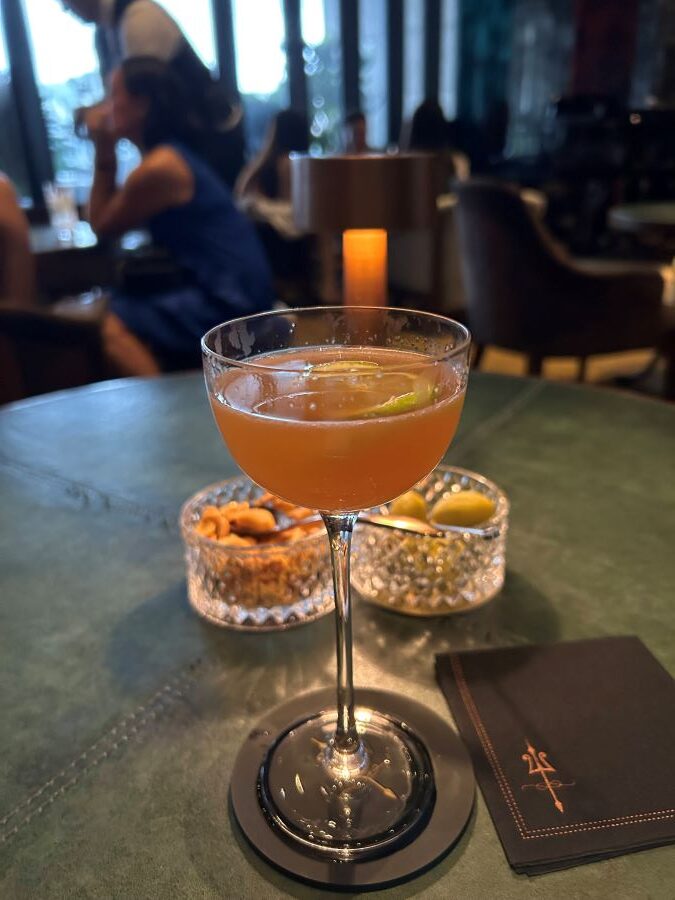
🍸 A Smart Trick: Hotel Bars
This is something I’ve done more than once.
If you want the atmosphere of a five-star hotel without committing to a full fine-dining bill, head to the bar instead of the main restaurant.
You can order a drink, pick something smaller from the snack menu, and still sit in the same beautiful surroundings. You’ll pay significantly less than you would in the main restaurant.
The last time I did this, I went to OZONE bar paid about HK$118 for Truffle fries and ginger ale HK$108 (well worth it for the amazing view alone).
International Buffets

If it’s your first time in Hong Kong, I recommending doing a buffet. It’s one of the easiest ways to experience the food scene in one go.
Expect to pay anywhere from HK$400 to $1,000+ per person, depending on the hotel and what’s included.
What you’re paying for is the scale and variety; these are lavish affairs. Think fresh seafood like lobster, crab, and prawns, alongside roast stations, sushi counters, and huge dessert spreads.
Most of the big hotels in Tsim Sha Tsui along the Kowloon waterfront and in Central run them, and they’re often some of the most popular dining experiences in the city.
I almost always book at least one buffet when I’m in Hong Kong. It’s an easy way to settle in, try a wide range of food in one place, and enjoy the atmosphere without overthinking where to eat.

If you are looking for a recommendation then go for The Grand Buffet in the Hopewell Centre (my favourite buffet for first-timers because you get an amazing 360° view of Hong Kong 65 floors up!). You can read my review on The Grand Buffet here.
I usually use Klook to compare buffet prices and book ahead — you’ll almost always find discounted rates, especially if you book at least a week in advance.
👉 Check buffet deals on Klook here
Prices can vary quite a bit depending on the day and time, so it’s worth checking availability on Klook early.
You will almost always save money if you go at lunch rather than dinner, and on a weekday instead of the weekend.
Afternoon Tea / High Tea

Afternoon tea is a bit of a British leftover, and over time it’s turned into a polished hotel experience rather than something people do every day.
It’s quite common, and you’ll find it in both hotels and standalone restaurants. The classic spots are in Tsim Sha Tsui for the skyline views, or Central if you want something a little quieter but still refined. High tea is generally served from 2:30pm to 5:00pm.
It’s expensive, there’s no getting around that. Expect to pay around HK$350–$600 per person. Yeah, not cheap.
To save money, I usually use Klook to compare high tea prices and book ahead — you can often find discounted packages, especially if you book a week in advance.
👉 Browse high tea deals in Hong Kong here
It’s one of the easiest ways to try a high-end experience without paying full prices.
I recently did one at Madame Fu restaurant in Tai Kwun—the surroundings were very pretty, and so was the high tea.
What you get is usually a tiered stand with savoury bites, scones, and small desserts, plus tea or coffee. I do one every trip because I love sweet things and I like to try the variety that you get with a high tea. But if you’re not into that, I would say skip it given the price.
Hong Kong Food Tours

Food tours in Hong Kong aren’t cheap, but for a first-time visit, they can be one of the easiest ways to get your bearings quickly.
👉 See the best food tours in Hong Kong here
Expect to pay around HK$300–$600 for a 3–4 hour tour.
If you’re looking purely at the cost of food, that’s obviously more than you’d spend eating on your own. But what you’re really paying for is the experience of trying a wide range of dishes in a short space of time, without having to figure everything out yourself.
You don’t have to worry about menus, language barriers, or whether you’re ordering the “right” thing — which is where most first-time visitors struggle.
👉 Check available Hong Kong food tours
Most tours run in small groups and can book out quickly, especially in popular areas like Sham Shui Po and Central.

I’ll be honest, I hesitated before booking one because of the price (I think they are on the higher price compared to other places around the world). But I tried one recently, and I really enjoyed it.
I was very full by the end of the three hour tour and I got to try a ton of different food I hadn’t eaten before. I also learnt a lot about the local area where the tour was (Sham Shui Po) and had a great time.
Most tours take you through neighbourhoods like Sham Shui Po (a more local, gritty part of Kowloon), or Central and Sheung Wan on Hong Kong Island.
If you want to understand how everything works first, this guide on how to navigate Hong Kong’s food culture breaks it down.
Hong Kong Foodie Tour (Sham Shui Po)
⭐ Best for authentic local food experiences
⭐ Licensed English-speaking guide
⭐ Great for first-time visitors
⭐ Includes multiple tastings over 3 hours
Self-Catering & Grocery Basics in Hong Kong

Even though Hong Kong is built around eating out, having access to a fridge — even just for a few basics — can make a real difference.
On my last trip, we stayed near a Wellcome supermarket and ended up in there most days picking up fruit, juice, snacks, and the occasional ready-made meal. Even after decades of coming to Hong Kong, I still use supermarkets like this strategically.
Sometimes you don’t want another heavy meal, you just want something cheap and simple.
Supermarkets like Wellcome, CitySuper, and ParknShop are everywhere, even if they’re not always obvious from the street. You’ll find plenty of ready-to-eat options: cut fruit, yogurt, roast meats, instant noodles, drinks (including alcohol).


You’ll find:
- Pre-cooked dim sum
- Roast meats sold by weight
- Microwave rice
- Instant noodles
- Pre-cut fruit
- Yogurt, cheese, deli meats
Average costs:
- Tray of sliced mango: HK$19
- Tray of papaya: HK$19
- Small watermelon pack: HK$24
- Small bag of almonds: HK$24
- Roast goose pack: HK$40–$50
- BBQ pork: HK$40–$50
- Toblerone: HK$16
This gives you a sense of casual, everyday costs. It’s not Southeast Asia cheap, but it’s not outrageous either.
Hidden Costs to Be Aware Of

There are a couple of small costs in Hong Kong that can catch you out if you’re not expecting them.
Most restaurants add a 10% service charge, which is standard and already included in your bill, so there’s no need to tip on top of that.
That said, I still tend to leave a small tip. It’s something we did growing up in Hong Kong, and it still feels natural to me, but it’s definitely not expected.
Drinks are where prices can creep up. Sparkling water, in particular, can be surprisingly expensive. I’ve made that mistake myself, and it ended up costing more than the meal.
Hotel bars and higher-end venues also tend to price drinks at a premium, so it’s worth checking before you order.
Overall, there’s nothing complicated here, but it’s good to be aware so you’re not surprised when the bill arrives.
👉 For more tips like this read 32 Essential Hong Kong Travel Tips Every First-Time Visitor Should Know.
How Much Should You Budget for Food Per Day in Hong Kong?

If you eat mostly local food, you could comfortably spend around HK$150–250 per day (likely less). If you mix in a nicer meal, that usually moves closer to HK$300–500. And if you’re adding in buffets, high tea, or fine dining, those days can easily reach HK$600–1,200 or more.
As a rough guide:
- Local-focused eating: HK$150–$250 per day
- Mix of local + one nicer meal: HK$300–$500 per day
- Including buffets, high tea or fine dining: HK$600–$1,200+ on those days
Most travellers end up somewhere between the first two, with a couple of higher-cost meals mixed in.
For me, that’s how I usually plan it. I keep everyday meals fairly simple, then set aside extra budget for a few standout experiences—whether that’s a buffet, a high tea, or a meal somewhere special.
So what does this actually look like in real life? Here’s how I personally budget food on a short Hong Kong trip.
How I’d Actually Budget Food on a 3–5 Day Hong Kong Trip

This is how I personally approach food spending in Hong Kong — not as a strict budget, but as a way to balance everyday eating with a few standout experiences.
If it’s your first time, you don’t need every meal to be a “moment.” Some of the best food you’ll eat here will be the simplest.
Here’s how I’d plan it.
Day 1: Keep It Local + One Nice Dinner

On your first day, I’d keep things simple and lean into local food.
Grab something easy when you arrive — a cha chaan teng, a takeaway rice box, or even something quick near your hotel. This is where you’ll get a feel for everyday Hong Kong eating, and it’s usually very affordable.
Then in the evening, I’d plan one nicer dinner.
Nothing over the top — just somewhere a bit more polished where you can sit down, relax, and ease into the city. This is a good night for a mid-range restaurant with harbour views or a well-known local spot.
👉 Why this works: You start cheap, then anchor your expectations with one “proper” meal without blowing your budget on day one.
Day 2: Choose One Experience (Food Tour or Buffet)

This is the day I’d plan one bigger food experience — but only one.
You’ve got two good options:
- Food tour → best if you want context, variety, and zero stress figuring things out
- Hotel buffet → best if you want to try a bit of everything in one place
Both are great. You don’t need to do both.
If it’s your first time in Hong Kong (or Asia), I’d lean toward a food tour. It removes all the guesswork and gives you a much better understanding of what you’re eating.
This is the food tour I’d personally recommend if it’s your first time in Hong Kong — it hits all the must-try foods without feeling rushed.
→ Check availability & see current pricing here
If you’re more confident or just want something easy, go for a buffet — it’s a very “Hong Kong” experience.
For your other meals that day, keep it light and local.
👉 Why this works: You get one high-value experience without stacking expensive meals on top of each other.
Day 3: Mostly Local + Optional High Tea

By day three, you’ll have a much better feel for the city, and this is where I’d pull things back.
Eat mostly local:
- noodle shops
- roast meat places
- casual cafés
These meals are often the most satisfying and the best value.
If you want something a bit different, this is a good day to add high tea, but only if it appeals to you.
I do it most trips because I enjoy it, but it’s not essential. It’s more about the experience than the food itself.
👉 Why this works: You balance out your spending after a bigger day and avoid that “everything is expensive” feeling.
If You’re Staying 4–5 Days

You’ve got more flexibility, but the same principle applies:
- Keep most meals local and simple
- Add 2–3 standout experiences across your trip (not every day)
That might look like:
- one food tour
- one buffet
- one nicer dinner or high tea
After that, you’ll start paying more without really getting more value.
What I’d Actually Do (If It’s Your First Time)
If it’s your first time in Hong Kong, I wouldn’t overcomplicate it.
Eat local most of the time — that’s where you’ll find the best value and some of the most memorable meals.
Then pick one or two standout experiences to build your trip around.
👉 If you want the easiest, no-stress introduction to the food scene, start with a food tour
👉 If you’d rather try a bit of everything in one go, go for a hotel buffet
👉 And if you want something a bit more relaxed and indulgent, book a high tea experience
I usually book these through Klook to compare prices and find discounts — it’s one of the easiest ways to save money, especially if you book ahead.
After that, just eat what looks good. Some of the best meals you’ll have in Hong Kong will be the simplest ones.
If you want to plan things out properly before you go, I’d start with what to eat in Hong Kong — it makes deciding where to spend your money much easier.
Read More Posts about Eating Out in Hong Kong 👇
- Hong Kong Food Culture: What First-Timers Need to Know
- Gluten-Free in Hong Kong: A Guide to Eating with Dietary Restrictions
- Is a Food Tour Worth It in Hong Kong? (My Honest Take)
- Best Food Tours in Hong Kong for First-Timers
- Hong Kong Foodie Tour Review: Is it Worth Booking?
- Are Hong Kong Buffets Worth It for First-Time Visitors?
- Grand Buffet Hong Kong Review: The Amazing Buffet Most Tourists Miss
- Best Afternoon Tea in Hong Kong (What’s Actually Worth It + My Honest Picks)
- Madame Fù Afternoon Tea Review (Tai Kwun): What It’s Actually Like
