Macau Day Trip from Hong Kong: How to Get There + My Itinerary


Disclosure: This article contains affiliate links. See the Disclosure Policy.
I’ve been to Macau many times, and I think it’s one of the best day trips you can do from Hong Kong.
That’s because Macau is incredibly easy to get to from Hong Kong (it takes about an hour by ferry), and it’ll give you a completely different experience.
While Hong Kong is all skyscrapers, harbour views and fast-paced city life, Macau has a slower pace, colourful Portuguese-influenced streets, grand casinos and some excellent food.
I generally recommend adding Macau to a four-day (or longer) Hong Kong itinerary. If you’ve only got two or three days in Hong Kong, I’d spend that time exploring Hong Kong itself.
In this guide, I’ll show you how to get to Macau, whether a day trip is enough, and the itinerary I’d recommend for first-time visitors.
Macau Planning at a Glance
Don’t have a lot of time? Here’s your mini first-timers guide to Macau.

What to book ahead:
– Macau Ferry Tickets
– E-Sim
– Insurance
– Macau Small group tour
Places to Eat & Drink:
– La Famiglia
– A Lorcha
– Restaurante Litoral
Top Things to Do:
– Senado Square
– Ruins of St. Paul’s
– Macau Tower
– Macao Museum
– Macanese Houses
– Taipa Village
Where to Stay:
– Grand Emperor Hotel (I stayed here. Perfect for a 1 night stay).
Macau Day Trip Overview
⏰ Time Needed: A full day
⛴️ Ferry Time: Approximately 1 hour each way
🚶 Walking Level: Moderate. Expect lots of walking, hills and steps around Macau’s historic centre.
💰 Cost: Budget around HK$400–800 (USD $50–100) per person for ferry tickets, food and attractions. More if you plan to visit the casinos or Macau Tower.
🛂 Passport Required: Yes. You’ll go through immigration when leaving Hong Kong and again when returning.
📵New E-SIM required: Your Hong Kong E-SIM won’t work in Macau so you’ll need a 1 day E-SIM especially for Macau.
🏨 Should You Stay Overnight? Not usually. A day trip is enough for most first-time visitors. Consider staying overnight only if you want to experience the casinos, nightlife or luxury hotels without rushing.
⭐ My Recommendation: If you’re spending four days or more in Hong Kong, I think Macau is well worth adding to your itinerary. If you only have two or three days, I’d focus on Hong Kong instead.
Understanding Macau Before You Go

Where is Macau?
Macau is a Special Administrative Region (SAR) of China, just like Hong Kong. It’s located around 60 kilometres (37 miles) west of Hong Kong, across the Pearl River Delta, and is easy to reach by ferry or bridge.
Although Macau is part of China, it has its own currency, immigration system and legal system. That means you’ll go through immigration when travelling between Hong Kong and Macau, so don’t forget to bring your passport.
One of the things I enjoy most about visiting Macau is how different it feels from Hong Kong. While Hong Kong is all about towering skyscrapers and a fast-paced city atmosphere, Macau has a slower pace, beautiful Portuguese-influenced architecture, colourful squares, grand casinos and some fantastic food.
👉 For the latest official visitor information, festivals and opening hours, visit the Macau Government Tourism Office.

Macau Day Tour
- Hotel pickup and transport from Hong Kong included
- Guided visit to Macau’s UNESCO-listed historic centre
- See the Ruins of St Paul’s, A-Ma Temple and Macau Tower
- Buffet lunch and return journey to Hong Kong included
The Two Main Areas of Macau
Macau is broadly divided into two areas, and most visitors spend time in both.
Historic Centre (Macau Peninsula)
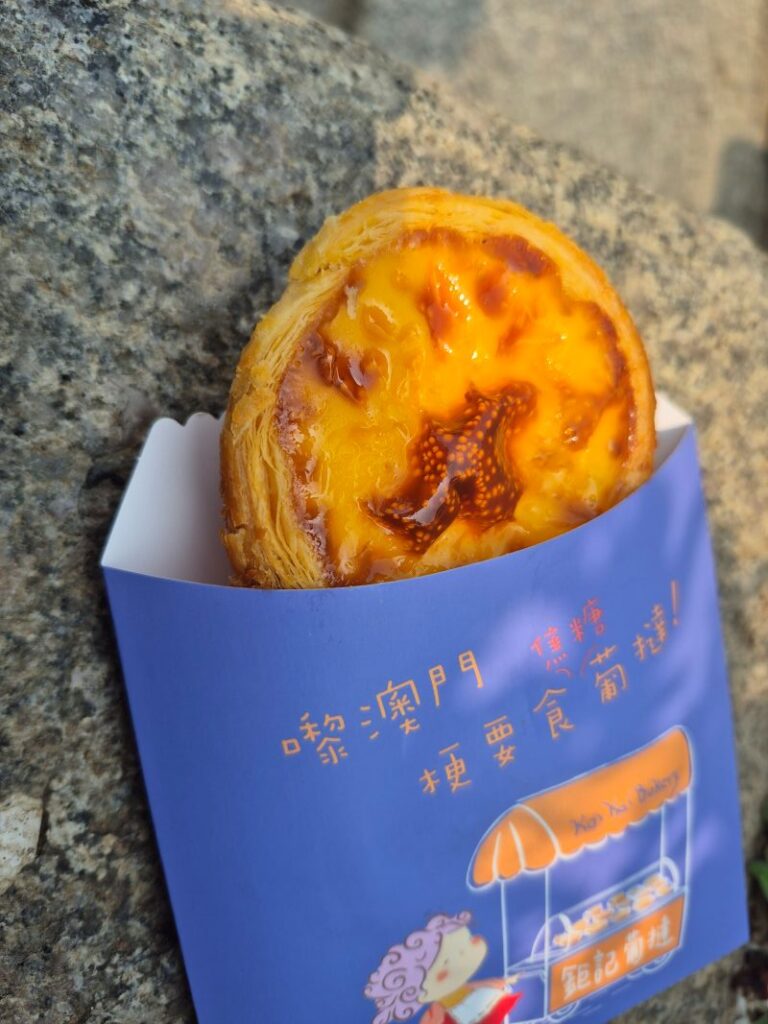
This is where you’ll find Macau’s UNESCO World Heritage-listed attractions, including Senado Square, the Ruins of St. Paul’s, Monte Fort and A-Ma Temple. It’s also the best place to try traditional Portuguese egg tarts.

Cotai and Taipa
Taipa and Cotai are connected to the Macau Peninsula by bridges and are home to Macau’s famous casino resorts, luxury hotels and huge shopping malls, including The Venetian, The Londoner and Wynn Palace. Even if gambling isn’t your thing, it’s worth visiting just to see the incredible scale of these resorts.
For me, though, the real highlight is Taipa Village. It’s a completely different side of Macau, with historic streets, great restaurants, leafy parks and the beautifully preserved Taipa Houses. I actually prefer spending my time here rather than in the casinos, and I’ll show you around it later in this itinerary.

Currency
Macau’s official currency is the Macanese Pataca (MOP), but don’t worry too much about changing money.
Almost everywhere accepts Hong Kong Dollars (HKD), and that’s what I normally use when I visit. Just remember that if you pay in HKD, any change you receive will usually be in Macanese Patacas.
Credit cards are accepted in hotels, larger restaurants and the casinos, although it’s still worth carrying a little cash for smaller cafés, bakeries or market stalls.
Language
The official languages of Macau are Chinese and Portuguese, although English is widely spoken. I’ve never had any problems communicating in hotels, restaurants or shops. However, not all taxi drivers speak English, so it’s a good idea to keep a screenshot of your destination on your phone so you can show them.
Free Casino Shuttle Buses
You may have heard that it’s possible to get around Macau using the free shuttle buses operated by the casino resorts.
While anyone can use these buses, I personally think they’re more trouble than they’re worth for most visitors.

On one trip, I decided to rely on them and ended up wasting quite a bit of time. The routes aren’t always obvious, many buses stop at several different resorts, and I was never entirely sure where I was going next.
If your main goal is to visit the casinos, the shuttle buses can be a useful (and free) way to get around.
However, if you’re simply sightseeing, I think taxis are a much easier option. They’re reasonably priced, take you directly where you want to go, and make much better use of your limited time in Macau.
Is a Day Trip to Macau Enough?

I’ve done Macau both ways: as a day trip from Hong Kong and as an overnight stay.
Staying overnight gave me time to explore more of both the historic centre and the Cotai side, and I enjoyed being able to slow down, have dinner and see Macau in the evening.
That said, you really don’t need to stay overnight to get a good feel for the city.
If Hong Kong is the main focus of your trip, I would keep your hotel there and visit Macau as a day trip. My four-day Hong Kong itinerary shows you exactly where I would add the Macau day trip without sacrificing Hong Kong’s essential sights.
Leaving Hong Kong in the morning and returning in the late afternoon or evening gives you enough time to see the historic centre, try some Macanese food and visit the casino district if that interests you.
Who Should Stay Overnight?
An overnight stay makes sense if you:
- want to explore Macau at a slower pace;
- are particularly interested in the casinos and resort hotels;
- want to enjoy dinner and see Cotai lit up at night;
- have already allowed plenty of time for Hong Kong;
- prefer not to fit immigration, sightseeing and the return journey into one day.
✨If you do want to stay overnight, I recommend Grand Emperor Hotel. I’ve stayed here myself and it’s a great place and a very good location. The staff are also very helpful.
👉If you’re still deciding how long to spend in Hong Kong, see my guide to how many days you need in Hong Kong.
Who Should Visit for One Day?
A day trip is the better choice if:
- Hong Kong is the main purpose of your trip;
- you have four or five days in Hong Kong and want to add something different;
- you mainly want to see Senado Square, the Ruins of St Paul’s and a few of the major sights;
- you are happy with a fairly full day;
- you don’t want the inconvenience of changing hotels.
For most first-time visitors staying in Hong Kong, I think one day in Macau is enough. You’ll get a very good introduction without taking too much time away from Hong Kong.
Getting from Hong Kong to Macau

One of the best things about adding Macau to your Hong Kong trip is that it’s so easy to reach. You can travel by ferry, take a bus across the Hong Kong–Zhuhai–Macau Bridge, or—if money is no object—go by helicopter.
Ferry: My Recommended Option
Cost: Around HKD $160–200 ($20–25 USD) one way
Journey time: Around one hour
Best for: Most day-trippers
The ferry is my preferred way to travel between Hong Kong and Macau. It’s comfortable, straightforward and gives you a chance to sit down and enjoy the journey before a busy day of sightseeing.

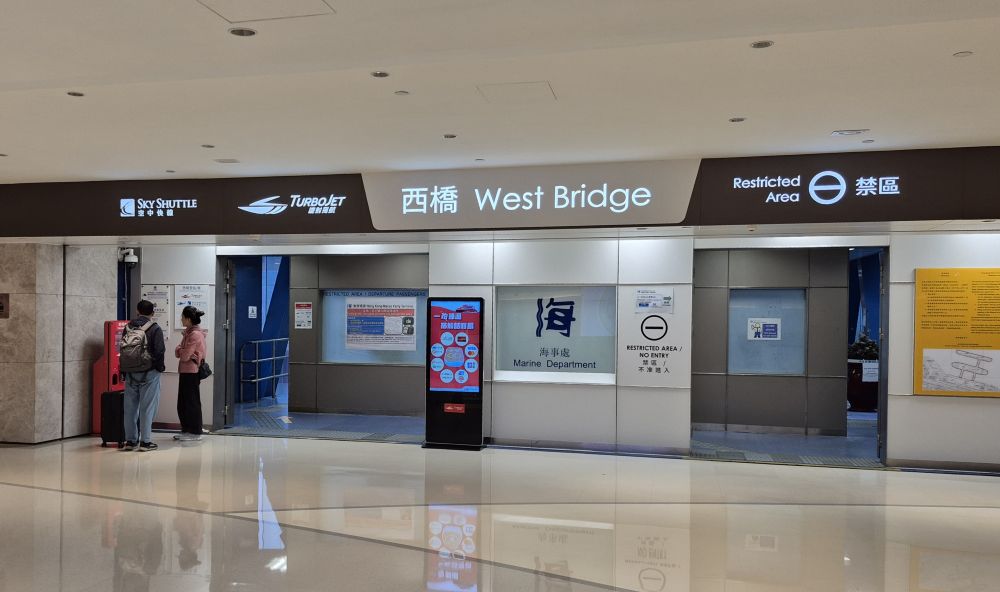
For this itinerary, I recommend taking a morning ferry from the Hong Kong–Macau Ferry Terminal in Sheung Wan to Macau’s Outer Harbour Ferry Terminal. Outer Harbour is the more convenient arrival point for Senado Square, the Ruins of St Paul’s and the other sights in Macau’s historic centre.
TurboJET currently operates the Sheung Wan–Outer Harbour route, with the crossing taking approximately 60 minutes. Sailing times and fares can change, so check the operator’s current timetable before travelling.
📍How to get there: Take the MTR to Sheung Wan Station and follow the signs for the Hong Kong–Macau Ferry Terminal. The route takes you through a shopping centre and up several levels, so keep watching for the ferry terminal signs. At times, it may feel as though you are heading in the wrong direction, but just continue following them.

Things to know before taking the ferry
- Bring your passport because you will pass through immigration in both directions.
- Arrive early enough to complete immigration and boarding procedures.
- Check that you are booking Outer Harbour, rather than Taipa, if you want to begin in the historic centre.
- If you are prone to seasickness, a seat near the centre of the vessel usually feels more stable.
- Book ahead for weekends, public holidays and other busy periods.
Bridge Shuttle Bus: The Cheaper Option
Fare: HK$65 during the day or HK$70 overnight
Bridge journey: Around 40–45 minutes
Best for: Budget travellers and people who prefer not to take a ferry
If boats aren’t your thing, you can take a bus over the world’s longest sea bridge.
Buses leave every 5–10 minutes from Hong Kong’s port (located near the airport) and drop you at Macau’s immigration checkpoint. It’s cheap, efficient, and no risk of seasickness.
Things to know before taking the bus
- Once you arrive, you’ll still need to take a taxi or shuttle to get into Macau’s main areas.
- The Hong Kong Port is located near the airport, so you will need to take the MTR from the city to get there (which will add on 30-45 minutes to your overall journey).
- The immigration lines can be long, so budget extra time.
Helicopter: The Luxury Option
Cost: Around HKD $4,000+ ($500+ USD) one way
Time: 15 minutes
Best for: If you feel like James Bond (or need the ultimate splurge)
Yes, you can literally fly between Hong Kong and Macau in 15 minutes.
The helicopter departs from Hong Kong’s ferry terminal and lands at Macau’s Outer Harbour.
It’s insanely cool, but unless you have cash to burn, it’s more of a “because I can” experience than a practical choice.
🛑A Word of Warning: Don’t Get Stuck Like I Almost Did!
Do not treat Macau as though it were simply another Hong Kong neighbourhood. It has a separate immigration system, and you must meet the entry requirements for both Macau and your return to Hong Kong.
Before you hop on a ferry or bus, double-check your passport validity. I once made the mistake of heading to Macau without realizing I had less than six months left on my passport. That’s a big no-no. Macau immigration didn’t want to let me back into Hong Kong, and for a hot second, I thought I’d be stuck at the border with no way back.
After a bit of pleading (and a lot of sweating), they finally let me in, but don’t take the risk. Make sure your passport has at least six months of validity so you don’t end up in an awkward situation like I did.
My Recommended Macau Day Trip Itinerary
Morning: Ferry to Macau and the Historic Centre
Take an early ferry from Hong Kong, ideally before 9 AM, so you have a full day in Macau.
After arriving at the Outer Harbour Ferry Terminal, you can take a taxi directly to Senado Square. However, if the weather is good and you are happy to walk, I prefer going on foot because you see more of Macau along the way.


The walk takes around 30 minutes. Follow the waterfront before heading towards the historic centre. Along the way, you will pass the Golden Lotus sculpture, which commemorates Macau’s handover to China, as well as several parks and public sculptures.
You will eventually arrive at Senado Square, the best place to begin exploring historic Macau.
Macau’s Historic Must-Sees
- Senado Square – A beautiful pedestrian square surrounded by colourful Portuguese-style buildings.
- Ruins of St Paul’s – Macau’s most famous landmark and one of the busiest stops in the city.
- Monte Fort – A historic fortress with excellent views across Macau.
- Macao Museum – A very good introduction to Macau’s history and the mix of Chinese and Portuguese influences that shaped the city.


These attractions are close together, so the historic centre is easy to explore on foot.
I would allow 2-3 hours for a wander around this area and visit Monte Fort and the Museum.
Optional Add-Ons (if you have time)
If you have extra time or one of these attractions particularly appeals to you, they’re easy to add on while you’re on the peninsula side.
Macau Tower is best known for its panoramic views over Macau and the Pearl River Delta. If you’re feeling adventurous, you can also try the famous Skywalk or even the world’s highest commercial bungee jump.
👉 You can get your Macau Tower Tickets here
Macau Grand Prix Museum is well worth a visit if you’re interested in motorsport. It tells the story of the Macau Grand Prix through interactive exhibits, historic race cars and motorcycles, and celebrates one of the world’s most famous street races. It’s located close to the ferry terminal.
👉 You can get your Macau Grand Prix Museum Tickets here
Lunch and Taipa Village
After exploring the historic centre, take a taxi to Taipa Village.
You can’t walk between the Macau Peninsula and Taipa, so you’ll need to use a taxi, bus or hotel shuttle. A taxi across the bridge is straightforward, although getting one can sometimes be harder than expected.
My usual solution is to go into a hotel and ask the concierge to order one. The last time I did this, the hotel also gave me a card showing the destination, which I could hand to the driver. This made the journey much easier because not every taxi driver speaks English.

Taipa Village is a small historic neighbourhood filled with old buildings, bakeries, shops, narrow lanes and restaurants. It has become very popular, so expect plenty of visitors, particularly around the main shopping streets.

For lunch, move away from the busiest streets and explore some of the quieter lanes. Prices are not especially cheap, but the quality of the food can be excellent.
On my last visit, we had a long lunch at La Famiglia, and the meal was one of the highlights of the day.


Afternoon: Taipa Houses and The Venetian
After lunch, walk through the nearby gardens and visit the Taipa Houses, a row of distinctive green colonial-era homes beside the water.


There is also a lovely small gift shop in this area, making it a good place to pick up something more interesting than the usual casino souvenirs.
From the Taipa Houses area, use the escalators and moving walkways towards Cotai and The Venetian Macao. The pedestrian route between Taipa Village and The Venetian takes around 10 minutes.


Even if you are not interested in gambling, it is worth going inside The Venetian to see the scale of the resort, the indoor canals and the elaborate shopping areas.
You can have a quick look around, do a little gambling if that appeals to you, and then take a taxi back to the ferry terminal for your return to Hong Kong.
Prefer Someone Else to Organise Everything?
If you’d prefer someone else to take care of the planning, this Macau Sightseeing Tour with Return to Hong Kong is a convenient way to see the city’s highlights in a single day.
I haven’t personally taken this tour, so I can’t comment on it from first-hand experience. However, it is very highly rated and includes most of the main sights you would want to see on a first visit, including Senado Square, the Ruins of St Paul’s, A-Ma Temple, Macau Tower and a casino.
Hotel pickup in Hong Kong, transport to and from Macau, a guided tour and buffet lunch are all included, making it a very good option if you want to see a lot without organising the logistics yourself.
Ready to Book Your Macau Day Trip?
If you’re planning to visit Macau from Hong Kong, these are the main things I’d recommend booking before you go.
⛴️ Ferry Tickets
For most visitors, I recommend taking the ferry from Sheung Wan to Macau’s Outer Harbour Ferry Terminal. Book ahead if you’re travelling on a weekend or public holiday.
🎟️ Guided Day Tour (Optional)
If you’d rather have someone else organise the day, a guided tour is a great alternative. It includes transport, lunch and many of Macau’s most popular attractions.
📱 eSIM
Having mobile data makes the day much easier. You’ll be able to use Google Maps, translate menus, order taxis and stay connected throughout your trip.
🛡️ Travel Insurance
Macau is an easy day trip, but I never travel without insurance. It’s one of those things you hope you never need, but it’s worth having just in case.
Have an amazing trip—I hope you enjoy Macau as much as I have over the years.
👉 Continue Planning Your Hong Kong Itinerary
These guides will help you decide how many days work best for you:
✈️Travelling Soon?
These are the travel tools and booking sites I personally use and recommend most often when planning a trip to Hong Kong:
Travel Insurance: I use Visitor Coverage to compare travel insurance policies side-by-side before I book.
Flights: I search flights using Expedia to compare prices and routes.
Hotels: I book most of my Hong Kong hotels through Booking.com because the free cancellation policies are often really flexible.
eSIMs: I use Airalo for mobile data in Hong Kong and China. It’s easy to set up before you land.
Airport Express Tickets: I usually book Airport Express tickets through Klook because the QR-code entry makes arrival much smoother after a long flight.
