Tai O Village Hong Kong: Is This Stilt Village Worth Visiting?


Disclosure: This article contains affiliate links. See the Disclosure Policy.
Most visitors head to Lantau Island for the Big Buddha and Ngong Ping, but Tai O gives you a completely different side of Hong Kong.
This small fishing village on the western side of the island is best known for its stilt houses, narrow lanes and seafood stalls. It feels quieter, older and much more local than the busy parts of the city most visitors see.
I finally visited Tai O on my last trip to Lantau, and I’m glad I did. I wouldn’t put it ahead of Hong Kong’s major sights on a short visit, but if you have four or five days in Hong Kong and are already going to Ngong Ping, it’s well worth adding to your day.
Here’s what Tai O is really like, how much time you need, and whether I think it’s worth the extra journey
👉 If you’re planning to combine both places, my guide to visiting the Big Buddha, Ngong Ping 360 and Tai O in one day walks you through the entire trip step by step.
What Tai O Fishing Village Is Like

Tai O is located on the western side of Lantau Island, tucked away from the main tourist areas.
For years I had wanted to visit, but I could never quite work out how easy it would be to get there independently.
Lantau Island itself is an unusual place. One side of the island has the airport and modern developments around Tung Chung. Another area is dominated by the mountains and monasteries near the Big Buddha.


It’s one of Hong Kong’s best known traditional fishing villages, originally settled by the Tanka people, one of the earliest communities in the region.
What makes it special is the stilt houses over the water, and the famous shrimp paste.
Surprisingly, Tai O didn’t feel overly touristy when I visited.
In some ways it reminded me a little of Cheung Chau or Lamma Island, but it still has its own identity.
👉 If you’re trying to decide which of Hong Kong’s quieter coastal areas to visit, I’ve also compared three Hong Kong outlying islands worth adding to your itinerary.
The village is small, with narrow lanes lined with shops selling dried seafood, local snacks, and unusual items like dried puffer fish hanging outside storefronts.
Tai O feels like a glimpse of a slower, older version of Hong Kong.
How to Get to Tai O from Ngong Ping

The easiest way to reach Tai O from the Big Buddha and Ngong Ping Village is by catching the No 21 bus.
The bus terminal is located right beside Ngong Ping Village and is easy to find.
I was doing a self-guided tour and using the Ngong Ping 360 Tai O Pass I bought from Klook. The pass comes with return cable car ride, return bus voucher to Tai O and the Tai O boat ride. This meant I just showed the bus driver the voucher.
If you are doing the bus ride without a pass, you will be able to use your Octopus card to pay.
If you’re not sure how fares work, my guide to paying for public transport in Hong Kong will explain.
One thing to be prepared for: queues.

When I visited, I waited about 45 minutes for the bus, and they don’t run particularly frequently — roughly once an hour.
Because of this, I recommend visiting earlier in the day rather than leaving it until late afternoon.
Taxis are not very common in this area of Lantau Island, so it’s best not to rely on finding one.
The bus journey itself is quite scenic. It winds along narrow mountain roads across Lantau Island before descending toward the coast and the village.
Travel time is about 20 minutes.
If you want detailed instructions on how to get there, read my How to Visit the Big Buddha in Hong Kong (Step-by-Step Guide).
Things to Do in Tai O

Tai O is famous for its traditional stilt houses, built directly over the water.
Many of them are still lived in today, although there are fewer than there once were.
Walking through the village, you’ll find small bridges crossing the canals, which make great photo spots.
What surprised me most was how compact the village is.
You can comfortably walk through most of it in 45 minutes to an hour, wandering along the narrow lanes and over the bridges.


The shops are very much focused on the fishing heritage of the village.
You’ll see stalls selling:
- dried seafood
- salted fish
- traditional snacks
Tai O is particularly famous in Hong Kong for its shrimp paste, which is often used in stir-fry dishes.
There’s also a local snack that many visitors try — Tai O donuts, which are fresh, hot, and very yummy.
I stopped for lunch in one of the small local restaurants and spent about 45 minutes relaxing there before continuing to explore.
The Tai O Boat Tour

One activity you’ll see offered around the village is a small boat tour through the canals.
The boats depart fairly regularly, and you simply line up near the dock.
The ride first takes you through the narrow waterways between the stilt houses, which gives you a closer look at how the village is built over the water.
After that, the boat heads out into the South China Sea.


During the ride we could see the massive Hong Kong–Zhuhai–Macau Bridge stretching across the water toward Macau and mainland China.
The area is also known for pink dolphins, although we didn’t see any during our trip.
I’ll be honest though, the ride felt a little chaotic. The captain occasionally sped up quickly to entertain the passengers, which made me slightly nervous.
We made it back to dry land safely though.
Where to Eat in Tai O

There are plenty of small local restaurants scattered throughout the village.
Most are simple, family-run places rather than formal dining spots.
Menus are often available in English, although you shouldn’t assume staff will speak much English.
The food is generally fresh seafood and simple Cantonese dishes, and the atmosphere is relaxed and informal.

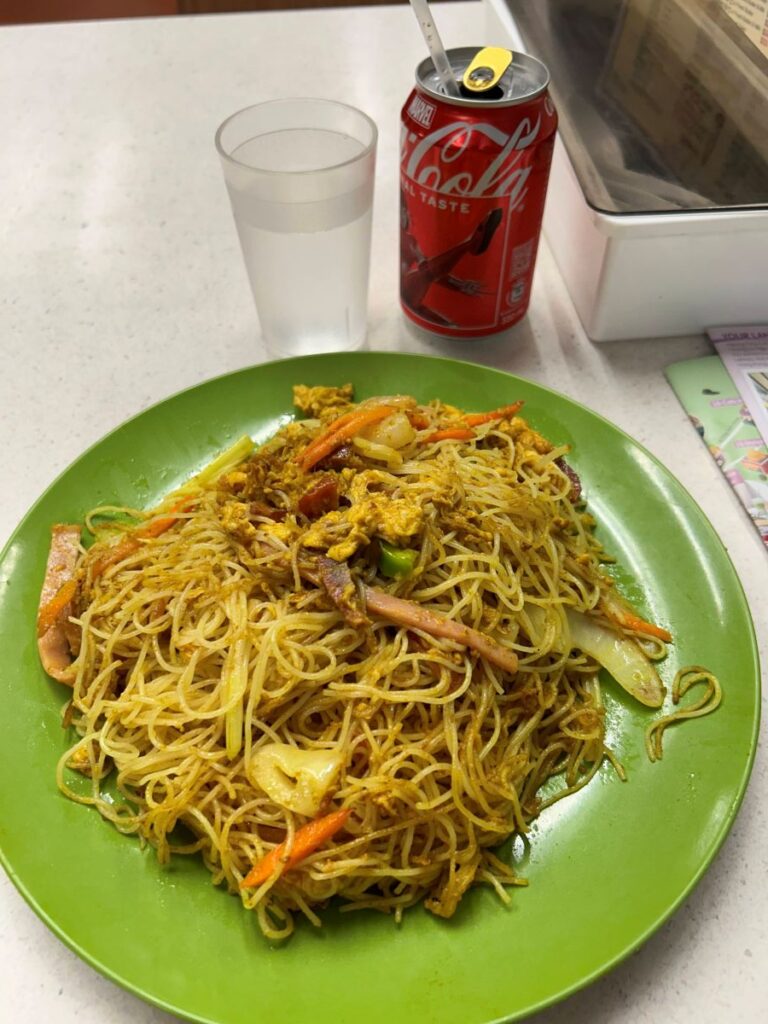
I had a really enjoyable meal while I was there.
If you’re visiting around lunchtime, it’s a nice place to sit for a while and watch the slow rhythm of village life.
How Much Time You Need in Tai O

Tai O is not a place where you need to spend an entire day.
I’d recommend allowing about two hours in the village.
That gives you enough time to:
- walk around the lanes
- take photos of the stilt houses
- try the boat tour
- stop for lunch or a snack
If you’re adding Tai O to your Big Buddha trip, it works best as a short extension to the day.
Is Tai O Worth Visiting?

I’m glad I visited Tai O.
It’s not somewhere I would necessarily return to on every trip to Hong Kong, but it was interesting to see a different side of the region.
If you don’t plan on visiting other outlying islands like Cheung Chau or Lamma Island, Tai O gives you a small glimpse of traditional Hong Kong coastal life.
Just be mindful of the return transport.
When I left the village, there were long queues for the bus back to Ngong Ping. I ended up waiting through several buses before finally getting on, and then had to stand for much of the winding ride back up the mountain.
On a hot day, that can be uncomfortable.
This is one situation where a guided tour might actually be the easier option, as transport is organised for you.
After returning to Ngong Ping, I took the cable car back down to Tung Chung, did a little shopping at Citygate Outlets, and then caught the MTR back into Central.
👉 If Hong Kong’s transport system is new to you, my step-by-step guide to using the Hong Kong MTR will make getting around much easier.
Can You See Pink Dolphins in Tai O?
The waters around Tai O are known for the Chinese white dolphin, often called the Hong Kong pink dolphin.
These dolphins sometimes appear in the waters around Lantau Island.
Some boat tours advertise dolphin spotting, but sightings are never guaranteed.
During my visit we didn’t see any, but the boat ride still offered nice views of the coastline and the Hong Kong–Zhuhai–Macau Bridge in the distance.
Best Time to Visit Tai O
The best time to visit Tai O is late morning or early afternoon, especially if you’re combining it with a visit to the Big Buddha.
Many visitors arrive in Ngong Ping first and then take the bus to Tai O, so the village tends to get busier in the middle of the afternoon.
If you want a quieter experience, try visiting on a weekday rather than a weekend.
Summer visits can also be very hot and humid, and there isn’t a lot of shade around the bus terminal, so it’s worth bringing water and sun protection.
Can You Visit Tai O and the Big Buddha in One Day?

Yes, that’s exactly what I did.
Tai O is located on the same island as the Big Buddha and Ngong Ping Village, which makes it easy to combine both places in a single day.
If you want to see exactly how this day works in practice, I wrote a full guide to my Lantau Island day trip visiting Ngong Ping 360, the Big Buddha and Tai O village.
Prefer to Visit Tai O on a Guided Tour?
You can absolutely visit Tai O independently, especially if you’re already going to Ngong Ping and the Big Buddha. That’s exactly what I did.
The main downside is the transport. The buses between Ngong Ping and Tai O aren’t particularly frequent, and when I visited I spent quite a bit of time waiting in queues in both directions. If you only have a few days in Hong Kong, that can eat into your day surprisingly quickly.
If you’d rather have someone else organise everything, a guided Lantau Island tour is a much easier option.
The tour I recommend combines Tai O with the main Lantau sights, including the Ngong Ping 360 Cable Car, Big Buddha and Po Lin Monastery. It also includes a local English-speaking guide, transport between the sights and a boat ride through Tai O’s famous stilt-house area.
One of the biggest advantages is skip-the-line access for the cable car, which can also save a considerable amount of time on busy days.
I still like doing Lantau independently because you have more freedom to explore at your own pace. But if you’re short on time, don’t want to deal with the bus queues, or simply prefer having the day organised for you, I think the guided tour is a very good option.
👉 If you’re still deciding how much sightseeing you can realistically fit in, my guide to how many days you need in Hong Kong will help you work out whether Tai O deserves a place in your itinerary.
Other easy first-timer activities
These are some of the most popular sightseeing activities for a first-time visit to Hong Kong:
- Victoria Peak for Hong Kong’s most famous skyline view
- Stanley for a relaxed seaside outing
- The Star Ferry for a quick harbour experience
- A Hong Kong public tram ride for inexpensive sightseeing
- A museum visit for a rainy or very hot day
✈️Travelling Soon?
These are the travel tools and booking sites I personally use and recommend most often when planning a trip to Hong Kong:
Travel Insurance: I use Visitor Coverage to compare travel insurance policies side-by-side before I book.
Flights: I search flights using Expedia to compare prices and routes.
Hotels: I book most of my Hong Kong hotels through Booking.com because the free cancellation policies are often really flexible.
eSIMs: I use Airalo for mobile data in Hong Kong and China. It’s easy to set up before you land.
Airport Express Tickets: I usually book Airport Express tickets through Klook because the QR-code entry makes arrival much smoother after a long flight.
