How to Visit the Big Buddha in Hong Kong (Step-by-Step Guide)


Disclosure: This article contains affiliate links. See the Disclosure Policy.
If you’re planning your first trip to Hong Kong, the Big Buddha on Lantau Island is probably already on your radar.
And for good reason.
I’ve visited the Big Buddha several times over the years, and I still think it’s one of the best day trips you can do from the city. The combination of the Ngong Ping 360 cable car, mountain scenery, Po Lin Monastery and the Buddha itself gives you a completely different side of Hong Kong.
I’ve also done the journey in different conditions — including one trip where we arrived at Tung Chung only to find the cable car temporarily closed because of high winds — so I’ve learned a few things about how to make the day run more smoothly.
The good news is that it’s actually very easy to organise once you understand how the transport works.
In this guide, I’ll walk you through exactly how I visit the Big Buddha, step-by-step.
Where is the Big Buddha Located?

The Tian Tan Buddha, better known as the Big Buddha, sits high in the mountains of Lantau Island, beside the beautiful Po Lin Monastery.
I’ve been here many times over the years, and it’s still one of my favourite places to take people who are visiting Hong Kong. Even if you’ve seen plenty of photos of the Buddha, there’s something quite special about seeing it properly for the first time.
Most people get there via Ngong Ping Village and the Ngong Ping 360 cable car. I’d definitely recommend doing the same — the cable car ride across Lantau is part of the experience, with fantastic views over the mountains, the airport and the South China Sea.
From the main tourist areas of Hong Kong, allow roughly an forty minutes to get to Tung Chung, where you board the cable car.
How to Get to the Big Buddha from Central

The first step is getting to Tung Chung, which is the gateway to Ngong Ping.
From Central, take the Tung Chung MTR line.
If you haven’t used the system before, my guide to using the Hong Kong MTR explains how to buy fares, find the correct platform and navigate stations.
Travel time is about 35 minutes, and trains run frequently throughout the day.
Once you arrive at Tung Chung station, you’ll emerge beside Citygate Outlets Mall.
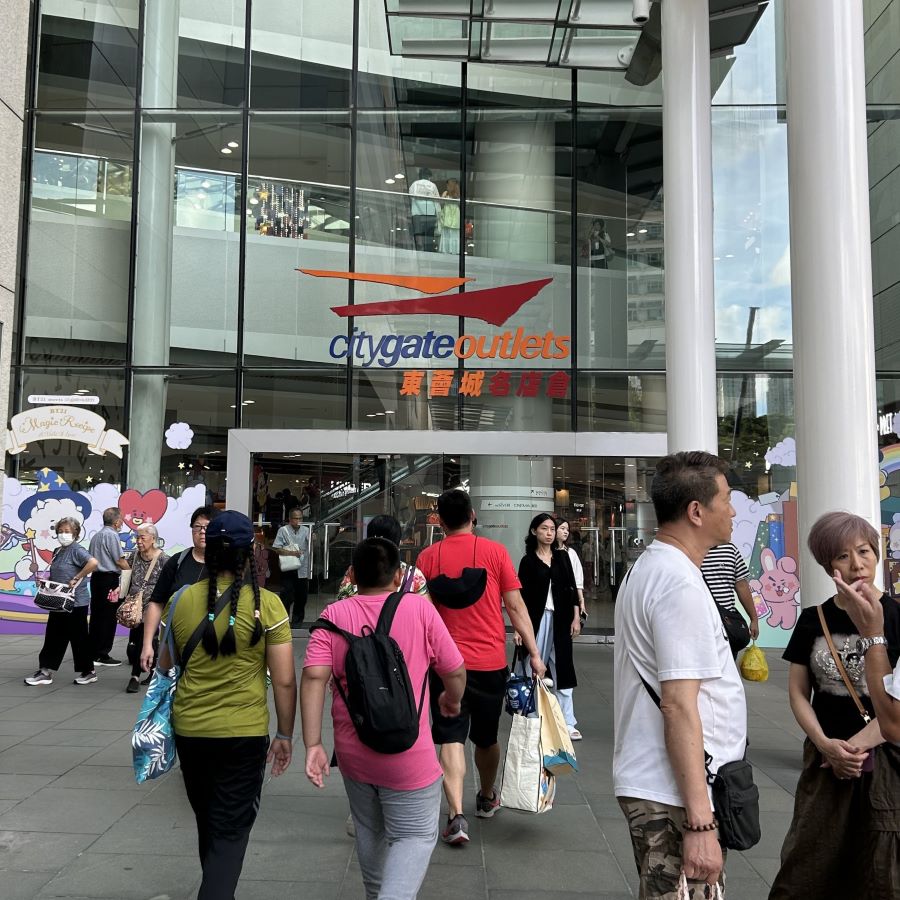

From there, you have two options for reaching the Buddha:
- The Ngong Ping 360 cable car
- A public bus up the mountain
Most visitors choose the cable car, and that’s what I always use.
Option 1: Ngong Ping 360 Cable Car

For me, the Ngong Ping 360 cable car is one of the best parts of the whole trip.
I’ve done it several times now, and I still love the journey across Lantau. The gondola takes you over green mountains with huge views across the island, the airport and the South China Sea, so it feels like part of the sightseeing rather than just a way of getting to the Big Buddha.
The ride takes around 25 minutes, and there are two main cabin types.
The Standard Cabin is the cheaper option and still gives you excellent views.
The Crystal Cabin has a glass floor, which makes the ride a little more dramatic if you’re comfortable with heights.
I’ve used both, and I don’t think you need to pay extra for the Crystal Cabin unless the glass floor really appeals to you. The views are fantastic either way.
One of my favourite moments is towards the end of the ride, when the Big Buddha starts to appear in the distance. It’s a brilliant first glimpse and one of the reasons I always recommend arriving this way.
The Ngong Ping 360 cable car opens around 10 AM on weekdays and 9 AM on weekends, and arriving close to opening time usually means shorter queues.
Keep an eye on the weather
The last time I did this, we travelled all the way out to Tung Chung only to discover the cable car had been closed because of high winds.

Luckily, my travel companion and I decided to stick around for a while and went to the nearby Citygate Outlets for a coffee. I’m glad we did, because the weather warning was eventually lifted and the cable car reopened, so we still made it up to Ngong Ping.
👉 Citygate is also included in my guide to the best Hong Kong shopping malls, which may be useful if you want somewhere to eat or shop before returning to the city.
Buy your tickets in advance
One thing I would definitely recommend is buying your tickets online in advance. There are two queues at the cable car terminal: a huge, slow-moving one for people buying tickets on the day, and a much shorter, faster-moving queue for people who have already bought their tickets.
On my last visit, the difference between the two was enormous, so I wouldn’t just turn up and buy your ticket there.
Don’t Miss the Last Cable Car
One thing to watch is the closing time. The Ngong Ping 360 doesn’t run late into the evening, and operating hours can vary, so check the final cable car time for the day you’re visiting.
This is particularly important if you’re adding Tai O. Give yourself plenty of time to get the bus back to Ngong Ping rather than leaving it until the last possible connection.
Option 2: Bus from Tung Chung

If you’d rather avoid the cable car, you can also take Bus 23 from Tung Chung to Ngong Ping.
I haven’t actually done this journey myself — I’ve always taken the cable car — but the bus takes around 40 minutes and winds its way up through the mountains to Ngong Ping Village.
It’s a much cheaper option and obviously a good choice if you’re not comfortable with heights. The downside is that the road is quite winding, and you miss those fantastic aerial views you get from the cable car.
Another option is to take the cable car up and Bus 23 back down. That way you still get the cable car experience without paying for it in both directions.
You can pay for the bus using an Octopus Card, and my guide explains how the Hong Kong Tourist Octopus Card works and where to buy one.
Visiting the Big Buddha and Po Lin Monastery

Once you arrive at Ngong Ping Village, the Big Buddha is impossible to miss.
To get up to the statue itself, you need to climb 268 steps. It sounds worse than it is, but on a hot, humid Hong Kong day you’ll definitely feel it. I usually just take my time and stop for a breather if I need to.

The Buddha was completed in 1993 and is one of the largest seated bronze Buddha statues in the world. Around the base are six smaller statues known as the Offering of the Six Devas, each holding an offering to the Buddha.


Afterwards, don’t just turn around and leave. Po Lin Monastery is right beside the Buddha and is well worth having a proper look around.

I really like the contrast here. You’ve come from the noise and pace of Hong Kong, and suddenly you’re wandering through temple halls, incense-filled courtyards and traditional Buddhist buildings in the mountains.
Should You Add Tai O Fishing Village?

If you have enough time, you can also add Tai O fishing village to your day. It’s around 20 minutes from Ngong Ping by bus.
I’ve been to Tai O several times, and it feels completely different from the rest of Hong Kong. It’s an old fishing village best known for its stilt houses built over the water, narrow lanes and small seafood shops and markets.
I think it works particularly well combined with the Big Buddha because you get two very different sides of Lantau Island in one day.
👉 To see how the entire day fits together, follow my Ngong Ping 360, Big Buddha and Tai O day-trip itinerary.
That said, I wouldn’t try to squeeze Tai O in if you’re already short on time. I’d rather spend a relaxed few hours around Ngong Ping and the Big Buddha than rush through both.
I’ve written a separate guide to visiting Tai O fishing village if you’re deciding whether it’s worth adding to your day.
Guided Tour vs Visiting Independently

If you’re comfortable using Hong Kong’s public transport, visiting the Big Buddha independently is very easy.
My guide to getting around Hong Kong by MTR, tram, bus and ferry will also help you understand which transport option works best for each part of your trip.
The MTR and cable car systems are clear and well organised.
But some travellers prefer booking a guided tour, especially if they want:
- hotel pickup
- transport organised
- historical explanations from a guide
- a smoother visit to Tai O village
The tour I recommend combines the main Lantau Island sights, including the Ngong Ping 360 Cable Car, Big Buddha, Po Lin Monastery and Tai O Fishing Village. Transport between the sights is organised for you, there’s a local English-speaking guide, and you also get a boat ride through Tai O’s famous stilt-house area.
One of the biggest advantages is skip-the-line cable car access. On my last visit, the queue for people buying cable car tickets on the day was enormous, so this can save you a considerable amount of time.
👉 Check availability for the Lantau Island, Big Buddha & Tai O Guided Tour
Other easy first-timer activities
These are some of the most popular sightseeing activities for a first-time visit to Hong Kong:
- Victoria Peak for Hong Kong’s most famous skyline view
- Stanley for a relaxed seaside outing
- The Star Ferry for a quick harbour experience
- A Hong Kong public tram ride for inexpensive sightseeing
- A museum visit for a rainy or very hot day
✈️Travelling Soon?
These are the travel tools and booking sites I personally use and recommend most often when planning a trip to Hong Kong:
Travel Insurance: I use Visitor Coverage to compare travel insurance policies side-by-side before I book.
Flights: I search flights using Expedia to compare prices and routes.
Hotels: I book most of my Hong Kong hotels through Booking.com because the free cancellation policies are often really flexible.
eSIMs: I use Airalo for mobile data in Hong Kong and China. It’s easy to set up before you land.
Airport Express Tickets: I usually book Airport Express tickets through Klook because the QR-code entry makes arrival much smoother after a long flight.
